
Managers who actively engage with KPI tracking boost team productivity by nearly 30%, yet many still treat metrics as static reports rather than strategic tools. You can transform raw performance data into actionable insights that align your team, sharpen decision-making, and drive measurable results. This guide reveals how to harness KPIs effectively, avoiding common pitfalls while implementing proven frameworks that turn numbers into real competitive advantages.
Table of Contents
- Understanding the managerial role in KPI tracking
- Aligning KPIs with team goals for motivation and performance
- Common misconceptions managers have about KPI tracking
- Frameworks and models for managerial KPI responsibilities
- Practical steps for managers to integrate KPI data into their management practices
- Technology and tools empowering managers in KPI tracking and decision making
- Conclusion: Driving team success through proactive KPI management
- Boost your KPI tracking with Outsprinter
- Frequently asked questions about the role of managers in KPI tracking
Key takeaways
| Point | Details |
|---|---|
| Managers translate KPI data into strategic team actions | Active KPI use raises performance and validates data accuracy across departments |
| Aligning KPIs with team goals drives motivation | Clear KPI-goal connections account for 70% of employee motivation and output gains |
| Common misconceptions limit KPI effectiveness | Viewing KPIs as static tools or ignoring qualitative metrics reduces accountability by 22% |
| The KPI Management Cycle provides systematic structure | This framework guides selection, monitoring, interpretation, and action to cut inefficiencies by 25% |
| Modern platforms enable faster data-driven decisions | Real-time dashboards and AI analytics accelerate issue resolution by 45% |
Understanding the managerial role in KPI tracking
You serve as the translator between raw performance data and actionable team strategies. When managers actively use KPIs rather than passively monitor them, teams experience productivity improvements of around 29%. This difference stems from your ability to validate data accuracy, ensure metrics reflect current priorities, and communicate insights that guide daily work.
The KPI Management Cycle framework supports this translation process through four systematic phases. Selection involves choosing metrics that matter most to your team objectives. Monitoring tracks performance in real time. Interpretation analyzes what the numbers actually mean for your operations. Action converts insights into concrete adjustments.
Structured KPI cycles reduce misalignment-related inefficiencies by 25%, making the framework essential for consistent results. You need to embed these phases into your regular management rhythm rather than treating them as occasional exercises.
Your responsibilities extend beyond simply viewing dashboards:
- Validate that tracked metrics reflect actual team activities and current business priorities
- Identify patterns and anomalies that require investigation or intervention
- Communicate KPI findings to team members in context they can act on immediately
- Adjust metrics when business conditions or strategic priorities shift
- Connect individual contributions to broader organizational goals through KPI narratives
Pro Tip: Schedule monthly KPI relevance reviews to catch outdated metrics before they waste team attention. Ask whether each metric still connects to active business priorities and whether the data collection method remains accurate.
Deciding how many KPIs to track requires balancing comprehensiveness with focus. Too many metrics dilute attention. Too few miss critical performance dimensions. You should typically monitor 5 to 7 core KPIs per team, ensuring each one directly influences decisions you make weekly.

Aligning KPIs with team goals for motivation and performance
Clear connections between what you measure and what your team aims to achieve account for 70% of employee motivation. When people understand how their work contributes to tracked metrics, engagement and output both rise significantly. Your job involves tailoring KPIs to reflect team-specific objectives rather than imposing generic corporate metrics that feel disconnected from daily reality.
Misaligned KPIs create the opposite effect. Teams lose focus when metrics don't match their actual responsibilities or when targets feel arbitrary. Performance drops because people stop trusting that their efforts matter to what gets measured. You prevent this by involving team members in KPI selection conversations and explaining the rationale behind each metric.
Regular communication around KPIs reinforces accountability and maintains focus. Weekly discussions about current performance, emerging trends, and needed adjustments keep metrics alive as management tools rather than letting them fade into background noise. You should dedicate standing meeting time to KPI reviews, making them as routine as project updates.
KPI management best practices emphasize transparency in how metrics get calculated and what thresholds trigger concern. When your team understands the mechanics behind measurements, they can identify improvement opportunities independently rather than waiting for you to point out issues.
Pro Tip: Implement color-coded KPI thresholds using green for on-target, yellow for warning, and red for critical. Visual signals motivate faster action because status becomes immediately obvious without detailed analysis.
The connection between data transparency and accountability strengthens when everyone can see the same performance picture. You build trust by making KPI data accessible and by acknowledging both successes and shortfalls openly. This visibility transforms metrics from management surveillance tools into shared team resources for continuous improvement.
Alignment also requires adjusting KPIs as team objectives evolve. Quarterly reviews ensure your metrics still reflect current priorities rather than outdated goals. You maintain relevance by treating KPI sets as dynamic rather than permanent fixtures.
Common misconceptions managers have about KPI tracking
Sixty percent of managers mistakenly view KPIs as static reporting tools that simply document what already happened. This backward-looking perspective misses the strategic value of metrics as forward-looking guides for action. You should treat KPI data as dynamic inputs that shape decisions rather than historical records that only confirm outcomes.
Ignoring qualitative KPIs represents another widespread error. Metrics like team morale, innovation rate, or customer satisfaction quality matter as much as quantitative measures like revenue or units produced. You need both types to get a complete performance picture. Qualitative indicators often predict future quantitative results, making them valuable early warning signals.
Failing to communicate KPI insights reduces team accountability by 22% because people don't understand how their work connects to measured outcomes. You can't assume that sharing a dashboard automatically translates to shared understanding. Interpretation and context matter. Your role includes explaining what numbers mean and why they matter for team success.
Many managers treat KPI results as one-time data points rather than recognizing patterns over time. A single week's underperformance might reflect normal variation, while consistent decline signals a real problem. You need to distinguish signal from noise by tracking trends rather than reacting to every fluctuation.
Other misconceptions that limit effectiveness include:
- Believing more metrics automatically mean better insight when focus matters more than volume
- Assuming KPI tracking only applies to sales or finance rather than all departments
- Thinking KPI management requires specialized technical skills instead of systematic attention
- Expecting perfect data before taking action rather than using good-enough information decisively
High-performing KPI leadership distinguishes itself by actively interpreting metrics rather than passively consuming reports. These managers ask probing questions about anomalies, challenge assumptions behind calculations, and adjust strategies based on what data reveals. You should adopt this investigative mindset rather than treating KPIs as automated scorecards.
Frameworks and models for managerial KPI responsibilities
The KPI Management Cycle overview provides systematic structure through four interconnected phases that guide your approach. Selection starts by identifying which metrics align with strategic objectives. Monitoring involves tracking these metrics consistently. Interpretation analyzes what performance data actually indicates. Action implements changes based on insights gained.
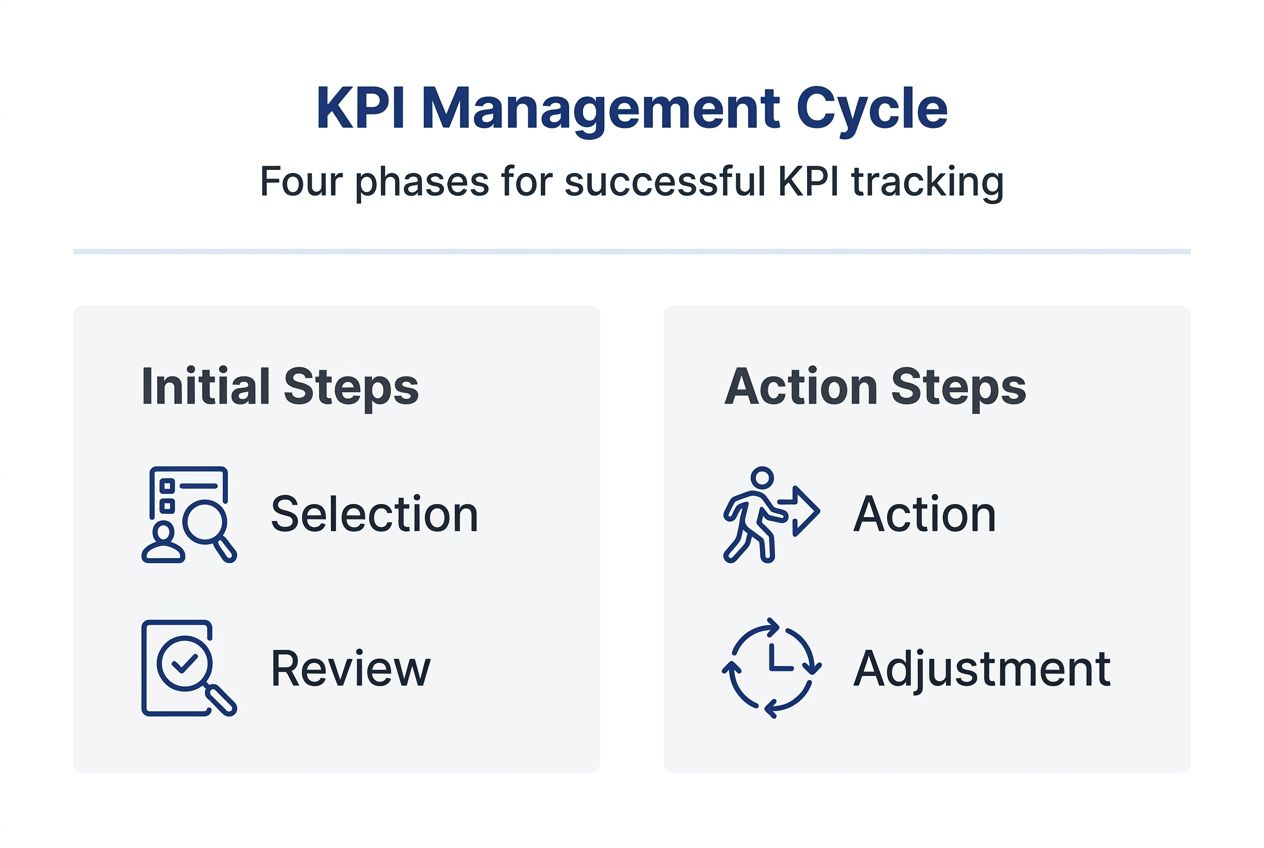
This cyclical approach decreases inefficiencies by 25% by preventing the drift toward irrelevant metrics and ensuring continuous feedback loops. You revisit each phase regularly rather than treating KPI setup as a one-time project. The framework integrates team communication at every stage, making KPI management a collaborative process rather than a top-down directive.
Pro Tip: Adopt a stepwise monthly KPI review that examines metric relevance, data accuracy, threshold appropriateness, and action effectiveness. This cadence catches issues early while avoiding review fatigue from excessive frequency.
Comparing traditional versus modern approaches clarifies why structured frameworks matter:
| Aspect | Traditional Approach | Modern KPI Management |
|---|---|---|
| Review frequency | Quarterly or annual | Weekly or real-time |
| Manager role | Passive recipient | Active interpreter |
| Team involvement | Limited visibility | Transparent access |
| Adjustment speed | Slow, bureaucratic | Rapid, data-driven |
| Technology use | Static spreadsheets | Dynamic dashboards |
The modern approach treats you as an active strategist who uses KPI insights to guide decisions daily. Traditional methods position managers as report consumers who wait for scheduled reviews before responding to performance issues. Speed and adaptability differentiate these models, with modern frameworks enabling faster course corrections.
Key framework components include:
- Clear metric definitions that eliminate ambiguity about what gets measured and how
- Established thresholds that specify acceptable, warning, and critical performance levels
- Defined review cadences that ensure consistent attention without overwhelming schedules
- Documented action protocols that specify responses to different performance scenarios
- Feedback mechanisms that capture team input on metric relevance and usefulness
Implementing these components systematically transforms KPI tracking from an administrative burden into a strategic advantage. You gain clarity about expectations, enable faster responses to issues, and build team ownership of performance outcomes.
Practical steps for managers to integrate KPI data into their management practices
Integrating KPI tracking into sprint planning improves project delivery by 28% because metrics inform task prioritization and resource allocation. You should review relevant KPIs at sprint kickoff to identify areas needing focused attention, then track progress throughout the sprint cycle. This rhythm connects strategic metrics to tactical execution.
Building a structured integration approach:
- Start weekly team meetings with a brief KPI dashboard review covering 3 to 5 core metrics.
- Identify any yellow or red threshold violations requiring immediate discussion or action.
- Connect current sprint tasks to the KPIs they're designed to improve or maintain.
- Schedule mid-sprint check-ins to assess whether planned work is moving KPIs in desired directions.
- Conduct sprint retrospectives that explicitly evaluate KPI impact alongside task completion.
- Adjust upcoming sprint priorities based on KPI trends and team feedback from retrospectives.
Using frequent data-driven feedback enhances goal achievement by 33% because course corrections happen before small issues become major problems. You provide this feedback by sharing KPI updates in context, explaining what changed and why it matters. Frequency matters more than formality. Brief daily or twice-weekly updates outperform elaborate monthly presentations.
Adopting real-time KPI dashboards speeds issue resolution by 45% by eliminating delays between problem emergence and awareness. You can spot anomalies immediately rather than discovering them weeks later through scheduled reports. This visibility enables proactive management instead of reactive firefighting.
Pro Tip: Prioritize tracking KPIs that most directly connect to your team's immediate objectives. Resist the temptation to monitor everything. Focus prevents information overload and keeps attention on metrics that actually drive decisions.
Encouraging regular team KPI reviews reinforces accountability and surfaces improvement ideas you might miss alone. Team members often recognize patterns or causes that aren't obvious from a distance. You facilitate these discussions by creating psychologically safe environments where people can candidly discuss performance without fear of blame.
Building a KPI tree helps connect high-level organizational metrics to team-specific measures. This hierarchical structure shows how individual contributions aggregate into broader outcomes, making the relevance of local metrics clearer to everyone involved.
Technology and tools empowering managers in KPI tracking and decision making
Real-time KPI dashboards reduce manager reaction time by 45% by presenting current performance data instantly rather than requiring manual report generation. You see issues as they emerge instead of discovering them through delayed batch reports. This immediacy fundamentally changes management from reactive to proactive.
AI trend analysis predicts KPI fluctuations by identifying patterns in historical data that suggest future performance. Predictive analytics can reduce KPI-related risk exposure by 15% by flagging potential problems before they fully materialize. You gain early warnings that enable preventive action rather than damage control.
Role-based data access focuses managers on KPIs relevant to their specific responsibilities. Instead of wading through organization-wide metrics, you see only the performance indicators that directly inform your decisions. This filtering enhances accountability because everyone owns clearly defined measurement domains.
Technology benefits for KPI management include:
- Automated data collection that eliminates manual entry errors and saves preparation time
- Customizable alert thresholds that notify you immediately when performance crosses critical levels
- Historical trend visualization that reveals patterns not obvious in current snapshots
- Mobile access that enables KPI monitoring from anywhere, supporting flexible work arrangements
- Integration with existing tools that connects KPI data to project management and communication platforms
45% faster reaction through dashboard use: Real-time visibility cuts the gap between problem emergence and managerial response by nearly half, accelerating issue resolution and preventing minor concerns from escalating into major setbacks.
The Outsprinter platform combines these capabilities into a unified solution designed specifically for mid-sized B2B teams. You get sprint planning tools integrated with KPI dashboards, ensuring execution visibility stays connected to performance measurement. AI-powered insights surface trends automatically, reducing the analytical burden on managers.
AI in KPI management also enables scenario modeling that shows how different decisions might affect future performance. You can test strategic options virtually before committing resources, reducing risk and improving choice quality. This capability transforms KPI systems from measurement tools into decision support platforms.
Technology streamlines communication by providing shared dashboards that everyone on your team can access. Conversations become more productive because people reference the same data rather than debating whose numbers are correct. You spend less time gathering information and more time interpreting it.
Conclusion: Driving team success through proactive KPI management
KPIs deliver value only when you actively interpret and act on them rather than treating metrics as passive monitoring tools. The difference between managers who boost productivity by 29% and those who see minimal impact lies in engagement level. You must move beyond viewing dashboards to asking probing questions, identifying patterns, and implementing changes based on what data reveals.
Alignment and open communication maximize KPI impact by ensuring everyone understands how their work connects to measured outcomes. When team members see the direct link between their efforts and tracked metrics, motivation and output both rise significantly. You create this connection through regular discussions that contextualize performance data and celebrate improvements.
Technology enables faster, better-informed decisions by providing real-time visibility and predictive insights. Real-time dashboards cut reaction time by 45%, while AI analytics flag emerging issues before they escalate. You leverage these tools to shift from reactive management to proactive strategy.
Proactive KPI management drives sustained team success by establishing clear expectations, enabling rapid course corrections, and building accountability into daily operations. The frameworks and practices outlined here transform metrics from administrative requirements into strategic advantages. You gain competitive edge by making decisions faster and with greater confidence than competitors who treat KPIs as afterthoughts.
Managers who systematically apply the KPI Management Cycle reduce inefficiencies by 25% while improving team productivity by nearly 30%, demonstrating that structured approaches to performance measurement deliver measurable business results.
How high-performing teams use KPIs differently comes down to treating metrics as living tools rather than static reports. You should adopt this mindset, continuously refining your approach based on what works for your specific team and objectives.
Boost your KPI tracking with Outsprinter
Managing KPIs effectively requires the right tools to transform data into actionable insights. Outsprinter platform delivers real-time dashboards, AI-powered analytics, and integrated sprint management specifically designed for mid-sized B2B teams like yours. You get role-based access that focuses attention on relevant metrics while maintaining visibility across departments.
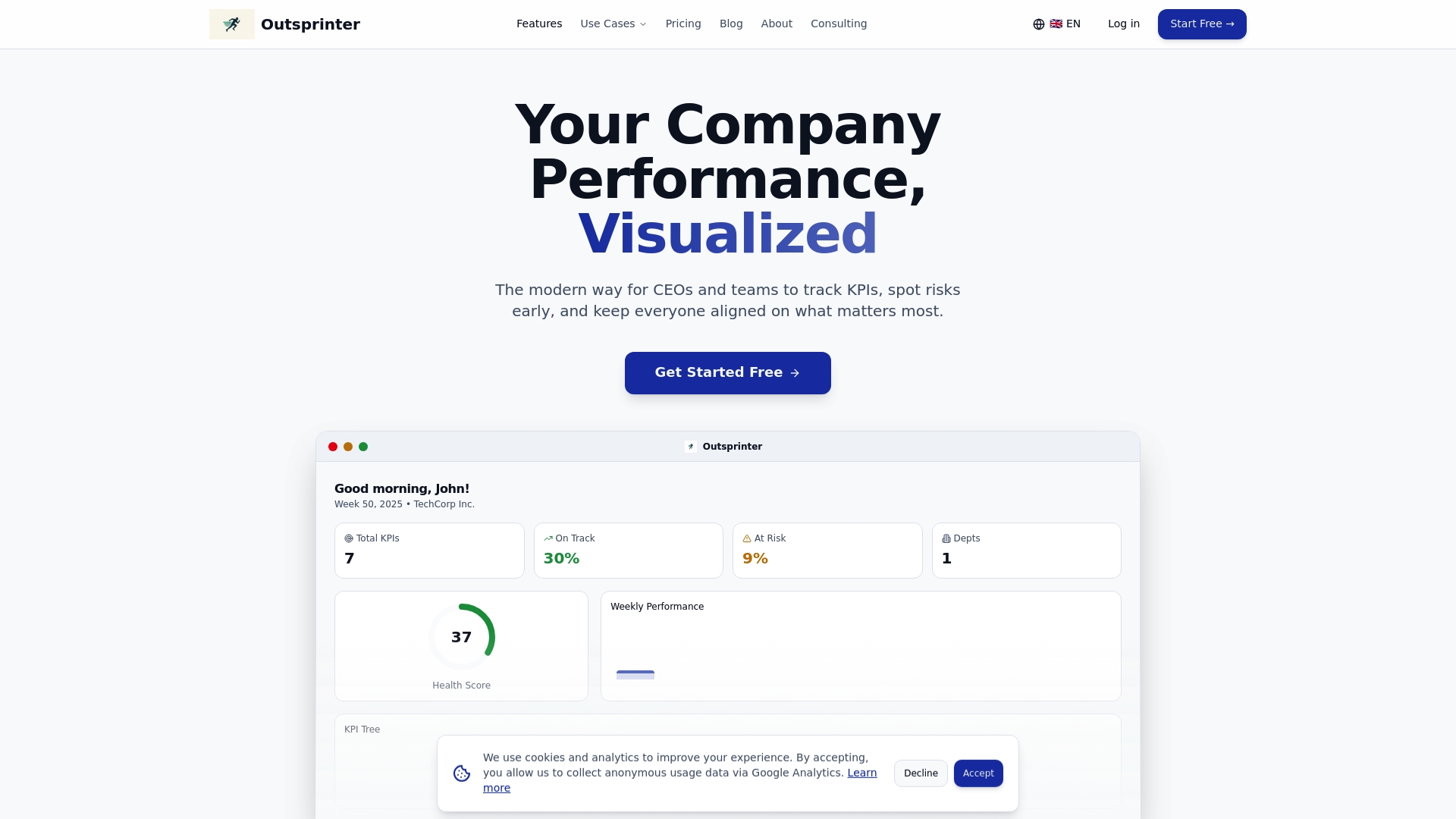
Our platform streamlines the entire KPI Management Cycle, from selection through action. You can set color-coded thresholds, receive automated alerts, and track trends that predict future performance. Sprint planning tools connect directly to KPI dashboards, ensuring execution stays aligned with measurement. AI insights surface patterns automatically, reducing analytical burden while improving decision quality. Bank-grade encryption and GDPR compliance protect your sensitive performance data. Start leveraging KPIs more effectively to drive measurable improvements in team productivity and strategic outcomes.
Frequently asked questions about the role of managers in KPI tracking
What are the main responsibilities of managers in KPI tracking?
You must select relevant metrics, monitor performance consistently, interpret what data reveals, and implement actions based on insights. Validating data accuracy and communicating findings to your team are equally critical responsibilities.
How often should managers review KPI data with their teams?
Weekly reviews work best for most teams, providing enough frequency to catch issues early without overwhelming schedules. Real-time dashboard monitoring should happen continuously, with formal team discussions weekly and deeper retrospectives monthly.
Can qualitative KPIs be as important as quantitative ones?
Absolutely. Metrics like team morale, innovation rate, and customer satisfaction quality often predict future quantitative results. You need both types to get complete performance visibility and early warning signals.
What technology features are most helpful for KPI tracking?
Real-time dashboards, automated alerts, AI trend analysis, and role-based access deliver the most value. Mobile accessibility and integration with existing project management tools enhance usability significantly.
How do managers maintain team motivation through KPIs?
Align metrics clearly with team goals, communicate openly about performance, celebrate improvements publicly, and involve team members in KPI selection. Color-coded thresholds provide visual motivation by making progress immediately obvious.