
Poor task management costs organizations millions every year. Research shows that 37% of projects fail due to poor planning involving task management, yet many team leaders still treat it as simple to-do list maintenance. For mid-sized organizations balancing growth with efficiency, task management becomes the backbone of team collaboration and project success. This guide defines task management clearly, explores proven strategies and tools, addresses common scaling challenges, and demonstrates measurable ROI. You'll learn practical frameworks to boost your team's productivity, reduce stress, and deliver projects on time.
Table of Contents
- What is task management and why it matters for mid-sized teams
- Strategies and tools to optimize task management in mid-sized organizations
- Common challenges and nuances in managing tasks at scale
- Maximizing ROI and team productivity with modern task management
- Explore Outsprinter for enhanced task and sprint management
- What is task management? Common questions answered
Key takeaways
| Point | Details |
|---|---|
| Task management drives success | Effective task planning, tracking, and completion reduce project failure rates and improve team collaboration in mid-sized organizations. |
| Strategic tools matter | Combining workload balancing, clear ownership, and adaptable tools with automation saves 8-12 hours per employee monthly. |
| Scaling brings challenges | Cross-team dependencies, context switching, and unclear accountability create bottlenecks that require deliberate mitigation strategies. |
| ROI is measurable | Modern task management delivers 384% ROI over three years, reduces stress by 41%, and improves completion rates by 37%. |
What is task management and why it matters for mid-sized teams
Task management is the systematic process of planning, organizing, tracking, and completing work activities to achieve specific goals. It involves breaking down projects into actionable tasks, assigning ownership, setting deadlines, monitoring progress, and ensuring completion. For individual contributors, this might mean maintaining a personal to-do list. For mid-sized teams, it becomes a complex coordination system requiring clear communication protocols, workload visibility, and accountability structures.
Mid-sized organizations face unique challenges that make task management reduces project failure critical. You're no longer small enough for informal hallway conversations to keep everyone aligned, but you're not large enough to justify enterprise-grade project management offices. Your teams need structured systems without bureaucratic overhead. When task management breaks down, the consequences multiply quickly. Deadlines slip because nobody knows who owns the blocking issue. Team members duplicate effort because visibility is poor. Critical tasks fall through cracks during handoffs between departments.
Consider a marketing team launching a campaign. Without proper task management, the designer waits on copy, the developer waits on assets, and the campaign manager has no visibility into what's actually blocking launch. Each person feels busy, but the project stalls. Effective task management creates transparency, eliminates these bottlenecks, and keeps work flowing smoothly across your organization.

The stress factor matters too. When tasks lack clear ownership or priorities, team members feel overwhelmed by ambiguity. They waste mental energy deciding what to work on next instead of executing. Strong task management removes this cognitive load by providing clarity on what matters most and who's responsible for what.
Pro Tip: Start with simple task management frameworks and evolve them as your team grows. A basic system used consistently beats a sophisticated tool that nobody adopts. Focus first on clear ownership and deadlines, then layer in prioritization and dependencies as your processes mature.
For practical implementation guidance, review this team management checklist 2026 to ensure your foundation covers essential coordination elements.
Strategies and tools to optimize task management in mid-sized organizations
Successful task management in mid-sized teams requires both smart strategies and the right tools. Let's explore proven approaches that balance structure with flexibility.
Core strategies for effective task management:
- Workload balancing prevents burnout and bottlenecks by distributing tasks based on capacity, not just availability
- Communication protocols establish when and how teams share updates, reducing meeting overhead
- The 3-3-3 priority rule limits focus to three major goals, three medium tasks, and three quick wins daily
- Regular review cycles catch slipping deadlines before they cascade into project delays
- Clear escalation paths ensure blocked tasks get resolved quickly without waiting for weekly meetings
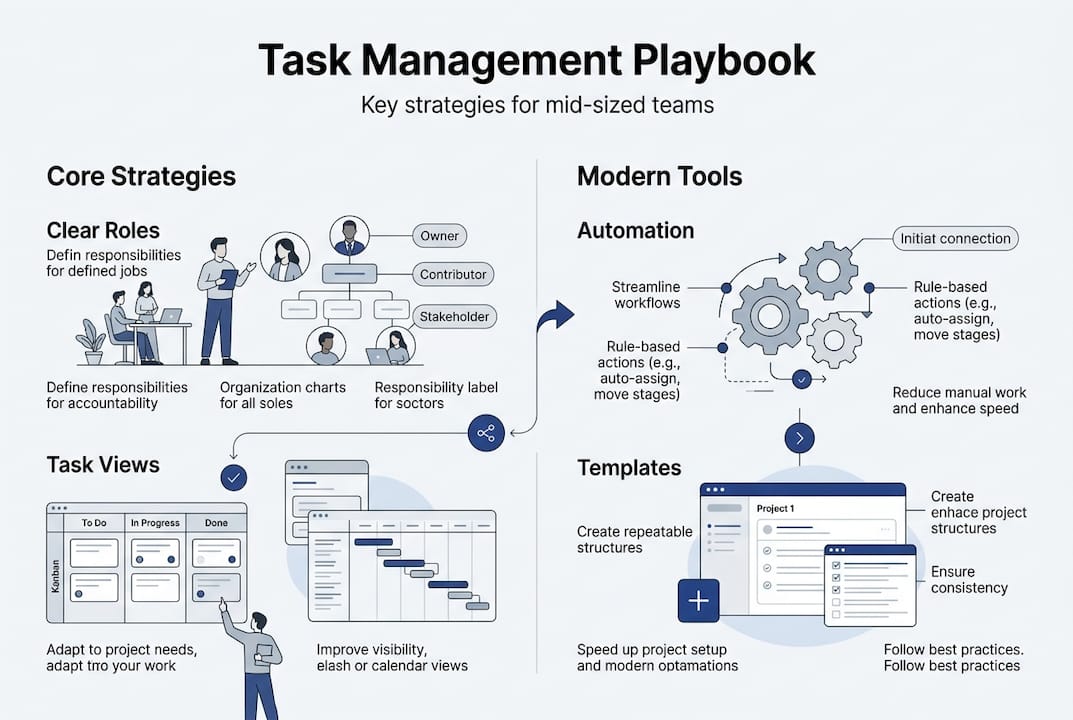
Your choice of task views significantly impacts team adoption and efficiency. Using multiple task views like Kanban or Gantt supports flexible planning by letting different roles see work in their preferred format.
| View Type | Best For | Strengths | Limitations |
|---|---|---|---|
| Kanban Board | Visual workflow tracking | Shows bottlenecks instantly, easy to understand | Hard to see long-term timelines |
| Gantt Chart | Timeline planning | Reveals dependencies, shows schedule impact | Overwhelming for daily task execution |
| List View | Quick task capture | Fast entry, simple prioritization | Lacks context for complex projects |
| Calendar View | Deadline management | Visualizes time constraints clearly | Doesn't show task relationships |
Mid-sized organizations benefit most from hybrid tools that combine task and project management. You need task-level granularity for daily execution but project-level visibility for strategic planning. Separate tools create silos where marketing uses one system, engineering uses another, and leadership sees nothing.
Implementation steps for tool adoption:
- Audit current task management pain points across departments to identify must-have features
- Select tools offering multiple views, automation capabilities, and reasonable learning curves
- Start with one pilot team to validate workflows before organization-wide rollout
- Create templates for recurring task types to ensure consistency and save setup time
- Train teams on both tool mechanics and task management principles for lasting adoption
Automation transforms task management from administrative burden to strategic advantage. Research demonstrates automation reduces 8-12 hours per employee monthly by handling routine updates, notifications, and status changes. Set up rules that automatically assign tasks based on project type, send reminders before deadlines, and update stakeholders when milestones complete.
Template reuse amplifies these gains. Build templates for standard workflows like client onboarding, content production, or sprint planning. Each template captures your refined process, ensuring new team members follow best practices immediately without reinventing approaches.
Pro Tip: Integrate multiple tool views into your daily rhythm rather than picking one favorite. Use Kanban boards for morning standups to spot blockers, Gantt charts for weekly planning to assess timeline risks, and list views for personal task prioritization. This prevents tool sprawl while maintaining flexibility.
Explore agile sprint management best practices for iterative approaches that work well in mid-sized environments, and compare options in this top task management tools 2026 analysis.
Common challenges and nuances in managing tasks at scale
As mid-sized organizations grow, task management complexity increases exponentially. What worked for 15 people breaks down at 50, and new obstacles emerge that simple tools can't solve.
Typical scaling obstacles:
- Cross-team dependencies create cascading delays when one team's output blocks another's work
- Context switching between multiple projects fragments focus and reduces productivity by up to 40%
- Unfinished tasks accumulate when priorities shift faster than teams can complete existing work
- Overcomplicated hierarchies with excessive subtask nesting make tracking progress nearly impossible
- Poor accountability structures leave tasks orphaned when ownership remains unclear during transitions
The dependency problem particularly plagues mid-sized teams. Your marketing campaign needs sales enablement materials, which need product specs, which need engineering input. When any link breaks, the entire chain stalls. Cross-team dependencies and poor task ownership cause blockages and task orphaning that derail timelines and frustrate teams.
Context switching deserves special attention. When team members juggle five projects simultaneously, they spend more time reorienting than executing. Each switch carries a cognitive cost as they reload project context, remember where they left off, and rebuild momentum. The solution isn't eliminating all switching but minimizing unnecessary transitions through better batching and focus time protection.
"Task orphaning happens when ownership transfers between team members or departments without explicit handoff protocols. These orphaned tasks sit in limbo, blocking downstream work while everyone assumes someone else owns them. Clear ownership assignment and regular orphan audits prevent this silent productivity killer."
The transition from pure task management to project management adds another layer of complexity. Projects bundle related tasks with shared goals, but this hierarchy can obscure individual accountability. Team members see the project but lose sight of their specific responsibilities within it. You need systems that maintain task-level clarity while providing project-level oversight.
Mitigation tactics for common obstacles:
- Map dependencies explicitly in your task tool so teams see upstream blockers before they cause delays
- Implement focus time blocks where team members work on single projects without interruption
- Conduct weekly orphan audits to identify tasks lacking clear current ownership
- Limit work in progress by establishing maximum concurrent tasks per person based on capacity
- Create escalation protocols that surface blocked tasks to managers within 24 hours
- Use standardized task descriptions that include context, acceptance criteria, and success metrics
These challenges intensify when organizations lack unified systems. Sales tracks tasks in spreadsheets, marketing uses a different tool, and operations has yet another platform. Information silos prevent the cross-functional visibility needed to manage dependencies effectively.
The human element matters as much as the technical solution. Even perfect tools fail when team culture doesn't value task hygiene. Build habits around updating task status promptly, documenting blockers clearly, and communicating changes proactively. For alignment strategies that support these cultural shifts, see master team alignment process.
Maximizing ROI and team productivity with modern task management
Effective task management delivers measurable financial returns and productivity gains that justify investment in better systems and training. The data makes a compelling case for prioritizing task management improvements.
Consider these empirical benchmarks from organizations that implemented structured task management:
| Metric | Impact | Timeframe |
|---|---|---|
| Time Savings | 92,400 hours saved annually | Per 1,000 users |
| Financial ROI | 384% return on investment | Three year period |
| Stress Reduction | 41% decrease in work stress | Within six months |
| Completion Rate | 37% improvement in task completion | First quarter |
| Meeting Time | 25% reduction in coordination meetings | Ongoing benefit |
These numbers reflect real outcomes from mid-sized organizations. Research confirms ClickUp users save 92,400 hours a year and see 384% ROI over three years through reduced coordination overhead, faster task completion, and better resource allocation. The task tools reduce stress by 41% and improve task completion by 37% statistics demonstrate both wellbeing and performance benefits.
Automation drives significant portions of these gains. When systems automatically route tasks, send reminders, update stakeholders, and flag at-risk deadlines, your team spends less time on administrative coordination and more time on valuable work. The 8-12 hours saved monthly per employee compounds across your organization.
Prioritization improvements contribute substantial value too. Without clear priorities, teams waste effort on low-impact tasks while critical work waits. Modern task management tools with built-in prioritization frameworks ensure your team focuses energy where it matters most. This focus translates directly to faster goal achievement and better business outcomes.
Tool centralization eliminates the productivity drain from platform switching. When your team manages tasks in email, spreadsheets, chat tools, and dedicated apps simultaneously, information fragments and coordination complexity explodes. A unified system creates single source of truth that reduces confusion and accelerates decision making.
The stress reduction benefit deserves emphasis because it affects both retention and performance. When team members have clear task lists, realistic workloads, and visibility into priorities, they experience less anxiety about what they might be missing. This psychological safety improves both job satisfaction and work quality.
Pro Tip: Leverage AI-powered prioritization in dynamic mid-sized teams where priorities shift frequently. AI can analyze task dependencies, deadline urgency, strategic importance, and team capacity to recommend optimal work sequences. This removes prioritization paralysis while adapting to changing conditions faster than manual methods.
Measure your own metrics to validate improvements and identify optimization opportunities. Track task completion velocity, time to resolution for blocked tasks, and team utilization rates before and after implementing new approaches. These baselines let you quantify ROI specific to your organization and justify continued investment in task management capabilities.
For tool comparisons that help you select platforms delivering these outcomes, review best task management software 2026 to evaluate options against your specific requirements.
Explore Outsprinter for enhanced task and sprint management
Now that you understand task management fundamentals and proven strategies, implementing these insights requires the right platform. Outsprinter provides mid-sized teams with comprehensive task and sprint management capabilities designed for your scaling challenges.
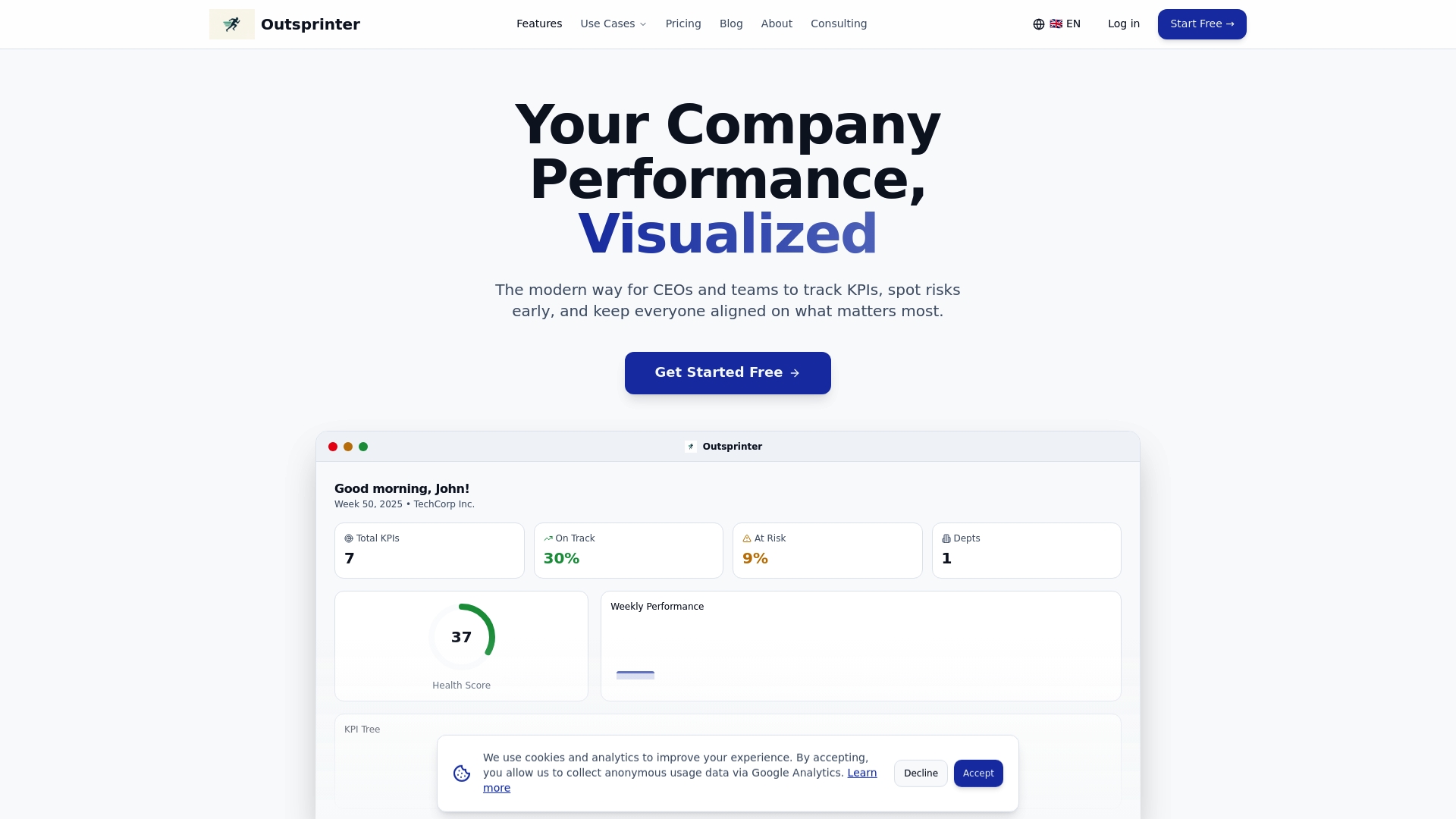
The platform combines task creation with priority settings, deadline tracking, subtask hierarchies, and recurring task automation. You can organize work into projects with health metrics and workload analysis that prevent team burnout before it happens. Real-time dashboards give you instant visibility into team performance and task progress without requiring status update meetings.
Outsprinter balances structure with flexibility, letting teams adopt agile sprint methodologies while maintaining autonomy in daily execution. The AI assistant helps you plan better KPIs, analyze performance patterns, and surface actionable insights from your task data. Role-based permissions ensure appropriate access across departments as your organization grows.
The platform continues evolving with regular enhancements based on user feedback and emerging best practices. Check Outsprinter updates to see recent improvements and planned features. Visit Outsprinter team performance platform to explore how the system can boost your team's productivity and execution rhythm.
What is task management? Common questions answered
What is the difference between task management and project management?
Task management focuses on individual work items with specific owners, deadlines, and completion criteria. Project management encompasses multiple related tasks organized toward a shared goal, including resource allocation, timeline coordination, and stakeholder communication. Mid-sized teams need both: project management for strategic oversight and task management for daily execution clarity.
How do I choose the right task management tool for my mid-sized team?
Evaluate tools based on view flexibility, automation capabilities, integration options, and learning curve. Your ideal platform should offer multiple views like Kanban and Gantt, automate routine updates, integrate with existing communication tools, and allow gradual adoption without overwhelming teams. Prioritize tools that scale with your organization rather than requiring replacement as you grow.
What are effective ways to balance workload and prevent team burnout?
Implement capacity-based task assignment that considers current workload before adding new responsibilities. Use workload visualization features to spot overloaded team members early. Establish work in progress limits that prevent task overload. Schedule regular one-on-ones to discuss workload concerns before they escalate. Build buffer time into estimates to accommodate unexpected complexity.
What makes a good task ownership culture in mid-sized organizations?
Strong ownership cultures feature explicit task assignment with single points of accountability, clear escalation paths for blocked work, regular status updates without micromanagement, and psychological safety to raise concerns early. Every task should have one owner responsible for completion, even when multiple people contribute. Avoid shared ownership that creates ambiguity about who drives progress.
How do Kanban boards and Gantt charts differ in task management?
Kanban boards visualize workflow stages and make bottlenecks immediately visible through column-based task organization. They excel for ongoing work with continuous flow. Gantt charts display tasks on timelines showing dependencies and schedule relationships. They work better for fixed-deadline projects requiring careful sequencing. Many teams use both views for different purposes rather than choosing one exclusively.