
Most HR leaders already know annual reviews are broken. 90% of HR leaders say they're outdated, yet many organizations still rely on them as the backbone of their performance systems. The real problem isn't the calendar, it's the lack of clearly defined roles and modern methodologies to support them. This article breaks down every critical role in performance management, compares traditional and modern approaches, and gives you a practical framework for building a system that actually drives results.
Table of Contents
- Key criteria for defining roles in performance management
- Role spotlight: HR director
- Role spotlight: Performance manager
- Other vital roles in performance management systems
- Traditional vs. modern performance management: Methodology comparison
- KPI ownership and best practices for tracking performance
- Common challenges for each role and how to overcome them
- Selecting the right framework for your organization
- Enable high-performance teams with the right tools
- Frequently asked questions
Key Takeaways
| Point | Details |
|---|---|
| Define roles clearly | Assign responsibilities for strategy, execution, and feedback across HR directors and performance managers. |
| Embrace continuous methods | Continuous feedback and data-driven processes outperform annual reviews by improving engagement and objectivity. |
| Align KPIs with goals | Strategically assign KPI ownership and leverage modern dashboards to keep performance focused and measurable. |
| Anticipate common pitfalls | Prepare to address bias, inconsistent cycles, and challenge areas within each key role. |
| Select frameworks contextually | Choose methodologies based on your organization's size, culture, and technological readiness for the best results. |
Key criteria for defining roles in performance management
Before assigning titles or responsibilities, you need a clear set of criteria that every role must satisfy. Without this foundation, performance management becomes a patchwork of overlapping duties and accountability gaps.
Strong role definitions share four core characteristics:
- Clear ownership of strategic, operational, and coaching responsibilities
- Integration with compensation, talent development, and succession planning
- Timely feedback mechanisms including agile check-ins and bias mitigation techniques
- KPI alignment with organizational goals and data-driven methodologies
These criteria matter because continuous performance systems make companies 4.2x more likely to outperform their peers. Role clarity is what makes continuous systems possible. Without it, feedback cycles stall and KPIs drift from strategy.
Pro Tip: Before redesigning roles, audit your current system against these four criteria. You'll quickly identify where ownership is blurry or where feedback loops break down. Use performance alignment criteria as your diagnostic checklist.
Role spotlight: HR director
The HR director is the architect of your entire performance management system. Every other role operates within the structure they design.
Core responsibilities include:
- Designing and continuously improving the system's philosophy and structure
- Aligning performance management with compensation, succession planning, and organizational values
- Steering talent reviews and addressing systemic bias at scale
- Training managers on coaching techniques, feedback delivery, and data literacy
HR directors oversee the design, implementation, and strategic alignment of performance management systems. That scope is enormous. It means an HR director isn't just setting policy; they're shaping how every manager and employee experiences performance conversations.
One area where HR directors increasingly add value is AI-driven performance management. Integrating AI tools for bias detection and trend analysis is now a strategic responsibility, not just an IT decision. Similarly, aligning KPIs with strategy requires the HR director to bridge the gap between executive goals and frontline metrics.
Pro Tip: HR directors should schedule quarterly system audits, not just annual ones. Catching misalignment early prevents cascading issues across manager and employee layers.
Role spotlight: Performance manager
If the HR director is the architect, the performance manager is the general contractor. They take the blueprint and make it real through daily execution.
Key responsibilities include:
- Managing both cyclical evaluations and real-time performance check-ins
- Assigning and tracking SMART goals and key performance indicators
- Providing structured feedback, administering performance improvement plans (PIPs), and supporting a coaching culture
- Integrating data and AI tools to increase objectivity in evaluations
Performance managers conduct evaluations, set goals, provide feedback, manage PIPs, analyze data, design training, and integrate with broader HR processes. That's a wide mandate. The best performance managers treat data as their primary tool, using dashboards to spot trends before they become problems.

For teams focused on boosting team success, the performance manager is the linchpin. They translate organizational strategy into individual accountability. When tracking performance impact across departments, their data feeds directly into executive decision-making.
Other vital roles in performance management systems
Beyond the two primary roles, high-performing organizations distribute responsibilities across a broader ecosystem. Each supporting role fills a specific gap.
Performance management success relies on clear responsibilities spanning coaching, analytics, peer review, and process ownership. Here's how those responsibilities break down:
- Department heads: Operationalize organizational goals into team-level targets and ensure data is delivered on time
- Team leads: Manage the daily coaching loop and maintain continuous feedback with direct reports
- HR business partners: Conduct bias audits and serve as the communication bridge between HR policy and business units
- Analytics and data specialists: Build and maintain performance dashboards, identify trends, and flag anomalies
- Employees: Participate in peer and 360-degree feedback processes to provide ground-level insight
Think of this as a performance ecosystem. Each role reinforces the others. When one breaks down, the whole system loses accuracy. Strong alignment with strategy depends on every node in this network functioning well.
Traditional vs. modern performance management: Methodology comparison
Role allocation shifts significantly depending on which methodology your organization uses. The contrast between traditional and modern approaches is stark.
| Dimension | Traditional | Modern |
|---|---|---|
| Review frequency | Annual or semi-annual | Continuous check-ins |
| Goal setting | Fixed, top-down | Dynamic, collaborative |
| Data use | Lagging indicators | Real-time dashboards |
| Bias mitigation | Minimal | Structured and AI-aided |
| Manager role | Evaluator | Coach and enabler |
| Employee role | Passive recipient | Active participant |
"Dynamic performance management is projected to grow from 6% adoption today to 35% by 2029."
That growth rate signals a fundamental shift in how organizations think about accountability. The modern review process moves managers from annual judges to year-round coaches. It also redistributes workload: HR directors spend less time designing review forms and more time building feedback infrastructure.
The practical impact is significant. Modern systems produce better engagement, faster course correction, and measurably less bias. The tradeoff is higher upfront investment in training and technology.
KPI ownership and best practices for tracking performance
Clear KPI ownership is what separates a performance system that looks good on paper from one that actually drives behavior.
| KPI type | Primary owner | Supporting role |
|---|---|---|
| Strategic KPIs | HR director | C-suite, department heads |
| Operational KPIs | Performance manager | Department heads |
| Team KPIs | Team leads | Performance manager |
| Individual KPIs | Employee | Team lead, performance manager |
Best practices for KPI tracking:
- Limit your KPI set. Focus on the vital few. More than 5-7 KPIs per role creates noise, not clarity.
- Make KPIs SMART. SMART KPIs aligned with organizational goals are the foundation of any credible tracking system.
- Use visual dashboards. Real-time visibility keeps every role accountable without requiring manual reporting.
- Separate leading from lagging indicators. Leading indicators predict future performance; lagging indicators confirm past results. You need both.
- Review KPI relevance quarterly. Goals shift. KPIs that made sense in January may be irrelevant by April.
For leadership teams and KPIs, the discipline of limiting and aligning metrics is what separates high-performing organizations from those drowning in data. A solid guide to performance tracking will always emphasize ownership before measurement.
Common challenges for each role and how to overcome them
Even well-defined roles run into predictable obstacles. Knowing them in advance is half the battle.
Bias, inconsistent cycles, and high-stakes PIPs are among the most common performance management challenges. Here's how each role addresses them:
- Recency bias: Managers overweight recent events in evaluations. Fix this with structured dashboards that surface performance data across the full review period.
- Halo effect: One strong trait colors the entire evaluation. Counteract it with multi-source feedback and calibration sessions.
- PIP mismanagement: PIPs in high-visibility roles carry legal and reputational risk. HR directors must standardize PIP templates and train managers on fair administration.
- Cycle inconsistency: Different managers run reviews on different timelines. Enforce a shared calendar and use automated reminders to keep everyone aligned.
- Siloed feedback: When coaching only flows from manager to employee, you miss critical insight. Build in peer feedback and self-assessments.
Pro Tip: When avoiding tracking pitfalls, the single most effective intervention is a shared dashboard. It creates a common language for performance conversations and removes the "my data vs. your data" dynamic from evaluations.
Selecting the right framework for your organization
No single framework fits every organization. The right choice depends on your size, culture, technology readiness, and strategic priorities.
"Modern systems prioritize development over punishment, balancing data with human judgment."
Here's a practical four-step process for selecting your framework:
- Audit current roles and gaps. Map who owns what today and identify where accountability is missing or duplicated.
- Match strategic needs to methodologies. A fast-growing startup needs agile, continuous feedback. A large regulated organization may need more structured cycles with audit trails.
- Pilot continuous approaches first. Start with one team or department. Measure engagement and performance outcomes before scaling.
- Iterate using feedback. Collect input from both managers and employees after each cycle. Adjust roles and processes based on what you learn.
For teams ready to act, selecting your performance management framework is easier when you start with a clear picture of your current state. Don't design for the organization you want to be; design for the one you are, then build toward your target.
Enable high-performance teams with the right tools
Understanding roles and methodologies is only valuable if you can put them into practice. The gap between knowing and doing usually comes down to tooling.
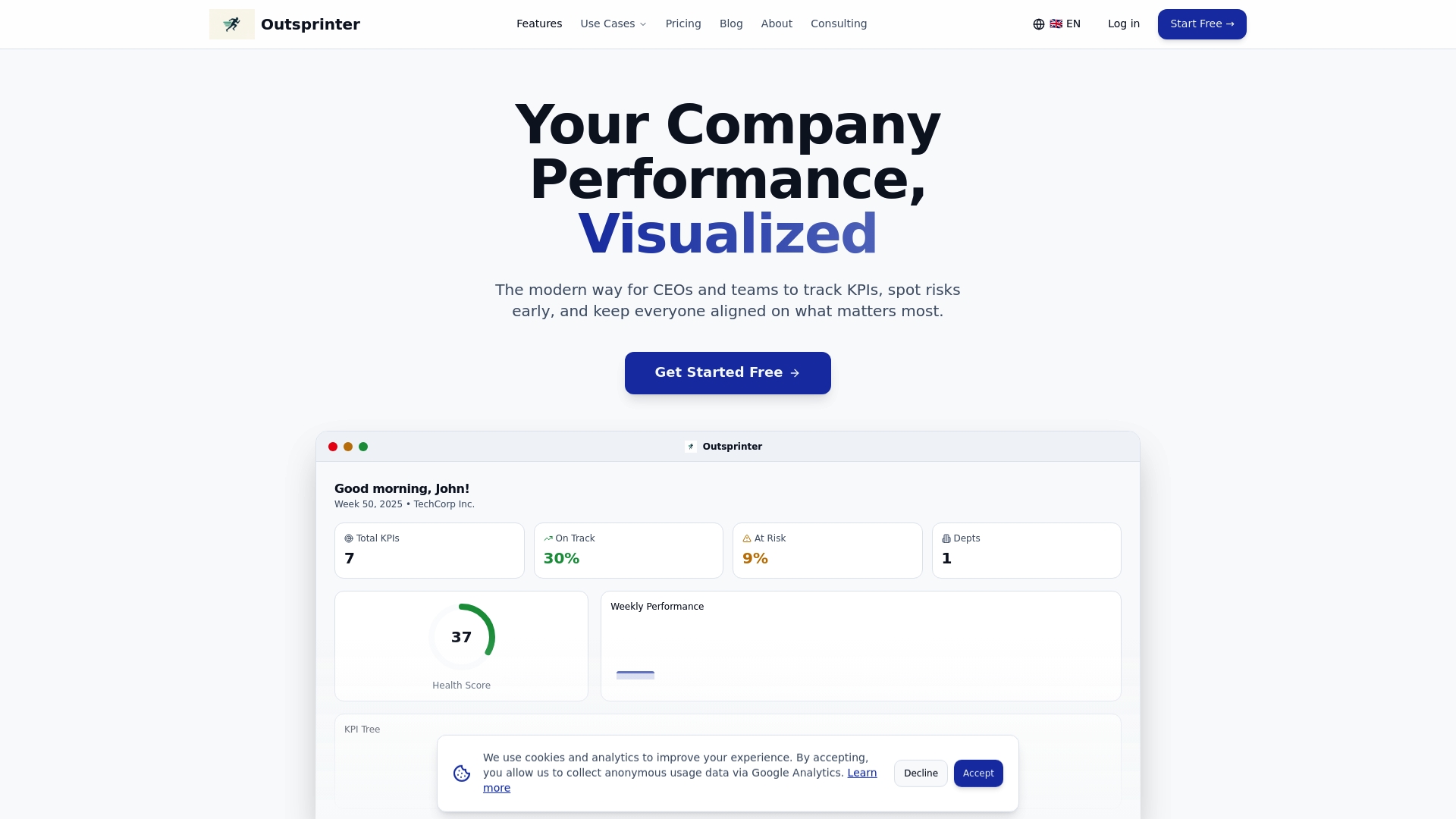
Outsprinter's performance management platform gives HR directors and performance managers everything they need in one place. Use real-time KPI tracking to assign ownership, visualize progress, and catch misalignment before it compounds. The advanced task management module lets you run continuous feedback cycles, assign SMART goals, and track PIPs without switching between tools. From real-time dashboards to AI-assisted insights, Outsprinter is built for the modern performance management roles you've just mapped out.
Frequently asked questions
What is the most critical role in performance management?
The HR director is typically the most critical role, as they define the system's strategy, alignment, and philosophy that every other role operates within.
How do performance managers and HR directors differ?
HR directors focus on system design and organizational strategy, while performance managers handle daily execution including evaluations, goal-setting, and feedback delivery.
What are the benefits of continuous feedback over annual reviews?
Continuous feedback increases engagement, reduces bias, and enables faster course correction. Companies using continuous performance systems are 4.2x more likely to outperform their peers.
Which roles should own KPIs in an organization?
Strategic KPIs belong to HR directors and department heads, while operational and team KPIs are owned by performance managers and team leads. SMART KPI alignment across all levels is the best practice.
How can companies avoid bias in performance evaluations?
Structured dashboards, regular feedback cycles, and manager training are the most effective defenses against recency and halo bias in evaluations.