
TL;DR:
- Effective task management connects daily actions to strategic goals, boosting team productivity and accountability.
- Overcomplex tools and poor implementation common mistakes that hinder task management success.
- Simple, focused systems with proper frameworks and metrics significantly improve task completion and project outcomes.
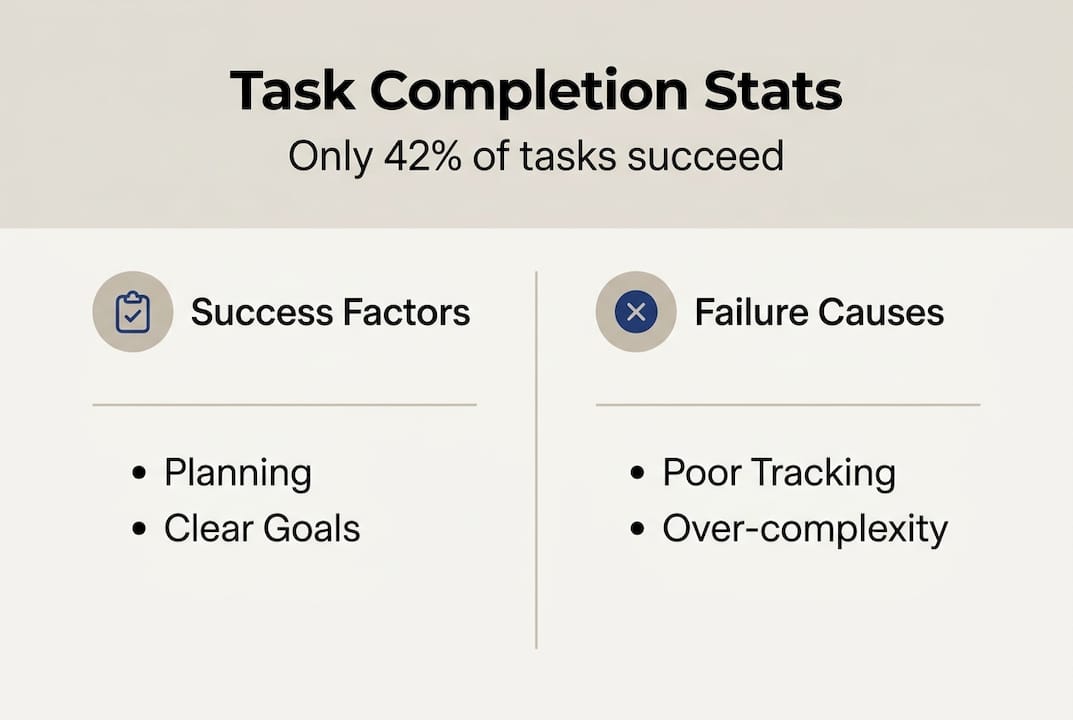
Most teams assume that adding more tools will fix their productivity problems. It won't. Only 42% of tasks and 48% of projects are completed successfully, even in organizations already using digital management software. That gap between effort and outcome is where team leaders lose sleep. This article breaks down exactly why task management is the real engine behind team productivity, what common mistakes are quietly killing your results, and which frameworks and metrics will help you close the gap for good.
Table of Contents
- Why task management is the engine of productivity
- What most teams get wrong about task management
- Frameworks and strategies for effective task management
- Measuring the impact: Data-driven results from better task management
- Why simple and focused wins in task management
- Take your team's productivity to the next level
- Frequently asked questions
Key Takeaways
| Point | Details |
|---|---|
| Task management boosts productivity | Evidence shows structured task management directly links to better team results. |
| Too many tools backfire | Complex or redundant apps can reduce deep work and raise stress instead of helping. |
| Simple strategies win | Teams get the biggest gains by focusing on clear, actionable systems and tracking their impact. |
| Measurement reveals progress | Tracking completion and deadlines shows whether your approach to task management is working. |
Why task management is the engine of productivity
Task management is not just about making lists. It is the system that connects daily actions to strategic goals, making sure every hour your team spends moves the business forward. Without that connection, work becomes reactive, priorities blur, and accountability disappears.
Research backs this up clearly. Planning, goal-setting, and task organization are evidence-based strategies that directly enhance both productivity and well-being. When your team knows what to do, why it matters, and when it is due, they spend less time second-guessing and more time executing.
The link between structured task management and performance is not theoretical. Teams that boost collaboration with task tools consistently report fewer missed deadlines, clearer ownership, and less duplicated effort. The system creates a shared reality across the team, replacing guesswork with clarity.
Here is what teams consistently report after adopting strong task management practices:
- Fewer missed deadlines because priorities are visible to everyone
- Clearer accountability since tasks are assigned with names and due dates
- Reduced meeting time because status updates live in the system, not in someone's head
- Better workload balance as managers can see who is overloaded before burnout hits
- Faster onboarding for new team members who can see active workflows immediately
"Structured task management is not a productivity hack. It is the foundation that makes every other productivity strategy actually work."
For a deeper look at the core principles behind this, the task management essentials guide covers what every team leader needs to understand before choosing tools or frameworks. The bottom line is simple: without a reliable system for managing tasks, even the most talented team will underperform.
What most teams get wrong about task management
If task management is so powerful, why do so many teams still struggle with results? The answer usually comes down to a few predictable mistakes that are easy to make and surprisingly hard to notice from the inside.

The biggest myth is that more features equal more productivity. Teams invest in feature-rich platforms, spend weeks configuring them, and then watch adoption collapse within a month. Overly complex tools and app switching reduce deep work and increase stress, which actually cancels out any productivity gains the tool was supposed to deliver.
Here are the top mistakes mid-sized teams make with task management tools:
- Choosing tools based on features, not fit. A tool built for enterprise task tools may overwhelm a team of 20. Match the tool to your team's actual workflow, not to a wish list.
- Mixing tasks with notes. Tasks are actions. Notes are ideas. When teams blur these two categories, important to-dos get buried in walls of text and never get done. The tasks vs notes distinction matters more than most managers realize.
- Switching tools too often. Every time your team migrates to a new platform, you lose context, history, and momentum. Consistency in your system beats novelty every time.
- No clear ownership rules. If a task can belong to anyone, it effectively belongs to no one. Teams need explicit assignment rules baked into their workflow.
Pro Tip: Keep your task manager for actions only. Use a separate note-taking tool for brainstorming and ideas. This single habit prevents the most common source of dropped tasks and missed deadlines.
When evaluating your current setup, look at the best task solutions that prioritize simplicity and adoption over raw feature count. The right tool is the one your team actually uses every day, not the one with the longest feature list.
Frameworks and strategies for effective task management
To move from pitfalls to productivity gains, teams need proven strategies and practical frameworks. The good news is that you do not need to invent anything new. Several well-tested approaches already exist, and the right one depends on your team's size, workflow, and goals.
Planning, prioritization, and task organization are the three pillars that underpin every effective framework. The frameworks below are built on exactly these principles.
| Framework | Description | Best use case | Team fit | Complexity |
|---|---|---|---|---|
| Eisenhower Matrix | Sorts tasks by urgency and importance into four quadrants | Individual and team prioritization | Small to mid-sized teams | Low |
| Kanban | Visual board with columns for task status (To Do, In Progress, Done) | Ongoing workflows and support teams | Any size | Low to medium |
| Agile Sprints | Work organized into fixed time periods (usually 2 weeks) with defined goals | Product and project teams | Mid to large teams | Medium to high |
Choosing a framework is only the first step. Adopting it effectively requires a deliberate rollout. Here is how to do it:
- Start with one team or one project before rolling out company-wide
- Define what "done" means for your team before you start assigning tasks
- Set a 30-day review checkpoint to assess adoption and adjust the process
- Train on the framework first, then introduce the tool that supports it
- Celebrate early wins to build momentum and reinforce the new habits
Pro Tip: Start with the simplest framework that solves your biggest problem. You can always add complexity later. Teams that start with Kanban and master it outperform teams that jump straight into full Agile without the foundation.
For teams ready to put these frameworks into practice, advanced task management features like priorities, subtasks, and recurring rules make implementation much smoother. You can also use the project execution checklist to make sure nothing gets missed during rollout.
Measuring the impact: Data-driven results from better task management
To truly know if task management drives productivity, teams must look at their numbers. Gut feelings are not enough. The data tells a clearer story, and it is one that justifies investing time in getting your system right.
The baseline is sobering. Only 42% of tasks and 48% of projects are completed successfully across organizations using digital tools. That means more than half of all planned work either fails or never finishes. Structured task management directly attacks these failure rates by adding visibility, accountability, and clear prioritization.
"When teams can see their work clearly, they complete more of it. Visibility is not a luxury. It is a performance driver."
Here is a summary of outcomes teams typically see when they move from unstructured to structured task management:
| Metric | Without structured task management | With structured task management |
|---|---|---|
| Task completion rate | 42% | 65-75% |
| Deadlines met | Below 50% | 70%+ |
| Team satisfaction score | Low to moderate | Moderate to high |
| Project ROI | Inconsistent | More predictable |
The key metrics your team should track to measure improvement are:
- Task completion rate: What percentage of assigned tasks are finished on time
- Deadline adherence: How often the team hits the original due date without extensions
- Workload balance: Are tasks distributed evenly, or is one person carrying everything
- Project health score: Is the project on track, at risk, or off track at any given moment
Tracking these numbers does not require a complicated system. Start with weekly check-ins on completion rates and use performance metrics examples to build a simple dashboard. If you want to understand why measurement matters before you build your system, the case for why you should measure team productivity is worth reading first.
Why simple and focused wins in task management
Here is an opinion that the productivity industry rarely says out loud: most teams do not need better tools. They need fewer of them.
Every feature-rich platform promises to solve the productivity problem. But the teams we see thrive are not the ones with the most sophisticated setups. They are the ones who picked one tool, committed to it, and built consistent habits around it. Simplicity drives adoption. Adoption drives results.
Over-complexity is the real productivity killer. When your team spends cognitive energy navigating a tool instead of doing the work, the tool has become the obstacle. The IT teams case study is a clear example: teams that simplified their task workflow saw faster delivery and lower burnout, not because they added features but because they removed friction.
The uncomfortable truth is that most productivity losses are a process problem, not a tool problem. Fix the process first. Then find the tool that supports it. Not the other way around.
Pro Tip: Before adding any new tool or feature to your workflow, ask whether your team has fully mastered what you already have. Mastery of one system beats surface-level use of five.
Take your team's productivity to the next level
The frameworks, metrics, and strategies in this article only deliver results when you have the right system to support them. Outsprinter is built for exactly this.
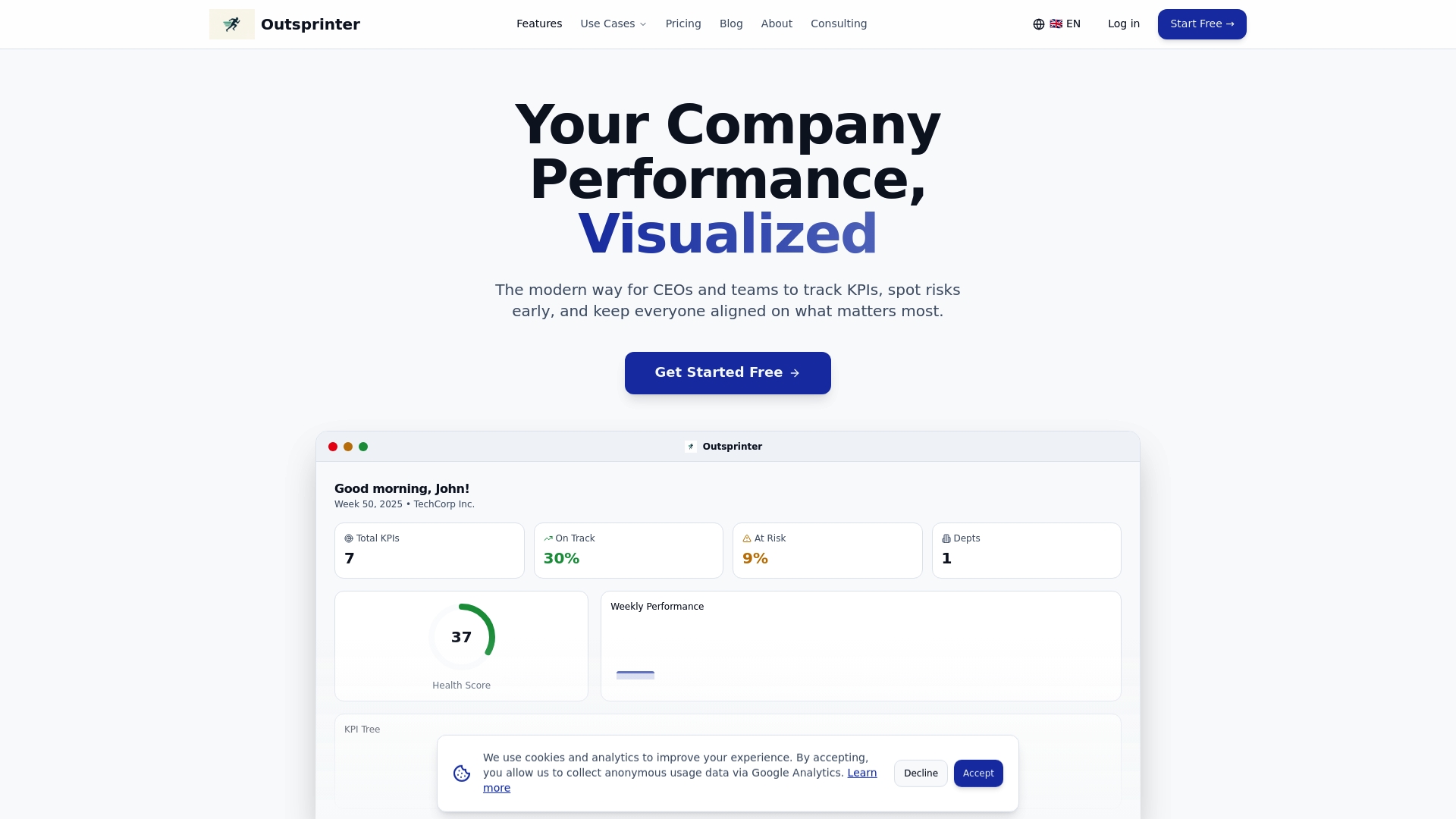
With advanced task features like priorities, deadlines, subtasks, and recurring rules, your team can implement any framework covered here without switching between apps. The project management platform adds health metrics, workload analysis, and progress tracking so you always know where things stand. Real-time dashboards update instantly as your team works, giving you the visibility to catch problems before they become missed deadlines. If you are ready to move from scattered tasks to a system that actually drives results, Outsprinter gives you everything in one place.
Frequently asked questions
What is the primary benefit of using task management tools for teams?
Task management tools clarify priorities, set firm deadlines, and build accountability across the team. Evidence-based strategies like goal-setting and task organization directly improve both productivity and team well-being.
Can too many task management apps hurt productivity?
Yes. App switching and complex tools reduce deep work and increase stress, which cancels out the gains you were hoping to achieve. One well-adopted tool beats five underused ones.
How can teams measure the impact of better task management?
Track task completion rates, deadline adherence, and overall project success rates week over week. Only 42% of tasks succeed without structured management, so even modest improvements show up quickly in your numbers.
What's a common mistake in adopting task management tools?
Mixing tasks with notes is one of the most frequent mistakes. Keeping task managers separate from note-taking apps prevents actions from getting buried in ideas and ensures nothing falls through the cracks.
Recommended
- Why use task management tools? Boost collaboration & results
- Advanced Task Management Software | Tasks, Subtasks & Recurring Work | Outsprinter
- Team management checklist 2026: boost project execution
- What is task management? Guide for team leaders 2026
- Why Automate WordPress Tasks for Business Efficiency - WPCTO
- Step by step productivity improvement: reduce screen time