
Effective teamwork at the executive level doesn't happen by accident. It's built through intentional, research-backed practices that most leadership teams either overlook or apply inconsistently. Managers account for 70% of variance in team engagement, which means the gap between average and high-performing teams often comes down to leadership decisions made at the top. This article walks you through the criteria, frameworks, and actionable strategies that separate good leadership teams from great ones, covering everything from team composition to emotional intelligence to measurable outcomes.
Table of Contents
- Establish criteria for leadership team success
- Optimize team composition and size for engagement
- Cultivate connected teaming and human skills
- Balance safe and challenging environments for growth
- Translate best practices into actionable frameworks
- Compare leadership team practice outcomes
- Empower your leadership team with Outsprinter solutions
- Frequently asked questions
Key Takeaways
| Point | Details |
|---|---|
| Evaluate team performance | Regular assessments and diagnostics are essential for continual leadership team improvement. |
| Choose optimal team size | Smaller teams increase engagement and focus while larger teams require careful structure. |
| Balance culture dynamics | Safe and challenging environments together foster innovation and accountability. |
| Invest in human skills | Developing emotional intelligence and curiosity drives high performance and strategic alignment. |
| Apply frameworks systematically | Action plans and review templates help teams turn insight into measurable results. |
Establish criteria for leadership team success
Before you can improve your leadership team, you need a clear picture of what success actually looks like. Most executives focus on outcomes like revenue or retention, but the inputs matter just as much. Effective leadership teams meet frequently, invest in development, and assess their own performance regularly. That's the baseline.
Here are the core criteria to evaluate your leadership team against:
- Meeting frequency and preparedness: Regular, well-structured meetings signal organizational discipline.
- Investment in team development: Ongoing coaching, training, and action planning keep teams sharp.
- Regular assessment and adaptation: Teams that measure themselves improve faster.
- Right mix of members: Diversity of thought, skill, and experience drives better decisions.
- Strategic alignment: Every member should understand and own the shared vision.
For leadership team productivity, alignment isn't a one-time conversation. It's a continuous process that requires structure and accountability. Building a strong team alignment process is one of the highest-leverage investments you can make.
"The best leadership teams don't just set strategy. They build the systems to execute it consistently."
Pro Tip: Use diagnostic frameworks like the McKinsey TEI model or the Bain performance model to run structured assessments of your team's effectiveness at least twice a year.
Optimize team composition and size for engagement
Once you know what success looks like, the next question is: who should be on the team, and how many people is too many? The answer is more nuanced than most executives expect.
Research shows the optimal median span is 5-6 direct reports per manager, though the average across organizations is closer to 12. Larger teams dilute individual accountability and make it harder for managers to invest meaningfully in each person's development.
Key factors that influence ideal team composition include:
- Engagement potential: Smaller teams allow for deeper relationships and faster feedback loops.
- Manager talent: A highly skilled manager can handle more complexity, but not unlimited scale.
- Task complexity: Specialized or interdependent work often requires tighter, more focused teams.
- Employee engagement outcomes: Engaged teams consistently outperform disengaged ones across every measurable metric.
For leaders managing multiple layers, task management for leaders becomes a critical skill. Knowing how to delegate, prioritize, and track work across a team is what separates reactive managers from strategic ones. A solid team management checklist can help you stay consistent as your team scales.
Pro Tip: Reassess your team structure every six months. As strategic priorities shift, the composition that worked last year may not serve you well today.
Cultivate connected teaming and human skills
Technology can automate a lot, but it can't replace the human dynamics that make leadership teams truly effective. High-performing teams emphasize connected teaming, emotional and social intelligence, and a culture of genuine curiosity. These aren't soft skills. They're strategic assets.
Here's what investing in human skills looks like in practice:
- Emotional intelligence training: Leaders who understand their own reactions make better decisions under pressure.
- Open communication norms: Teams that surface disagreement early avoid costly misalignments later.
- Curiosity as a cultural value: Teams that ask better questions find better solutions.
- Cross-functional empathy: Understanding other departments' constraints improves collaboration and reduces friction.
For performance visualization, human skills play a direct role. When leaders can read team dynamics accurately, they interpret performance data with more context and make smarter adjustments. A strong performance alignment guide helps bridge the gap between strategic vision and day-to-day execution.
"Emotional intelligence isn't a leadership bonus. It's the foundation that makes every other practice work."
Pro Tip: Integrate emotional intelligence assessments into your annual leadership development program. Use the results to build personalized coaching plans for each team member.
Balance safe and challenging environments for growth
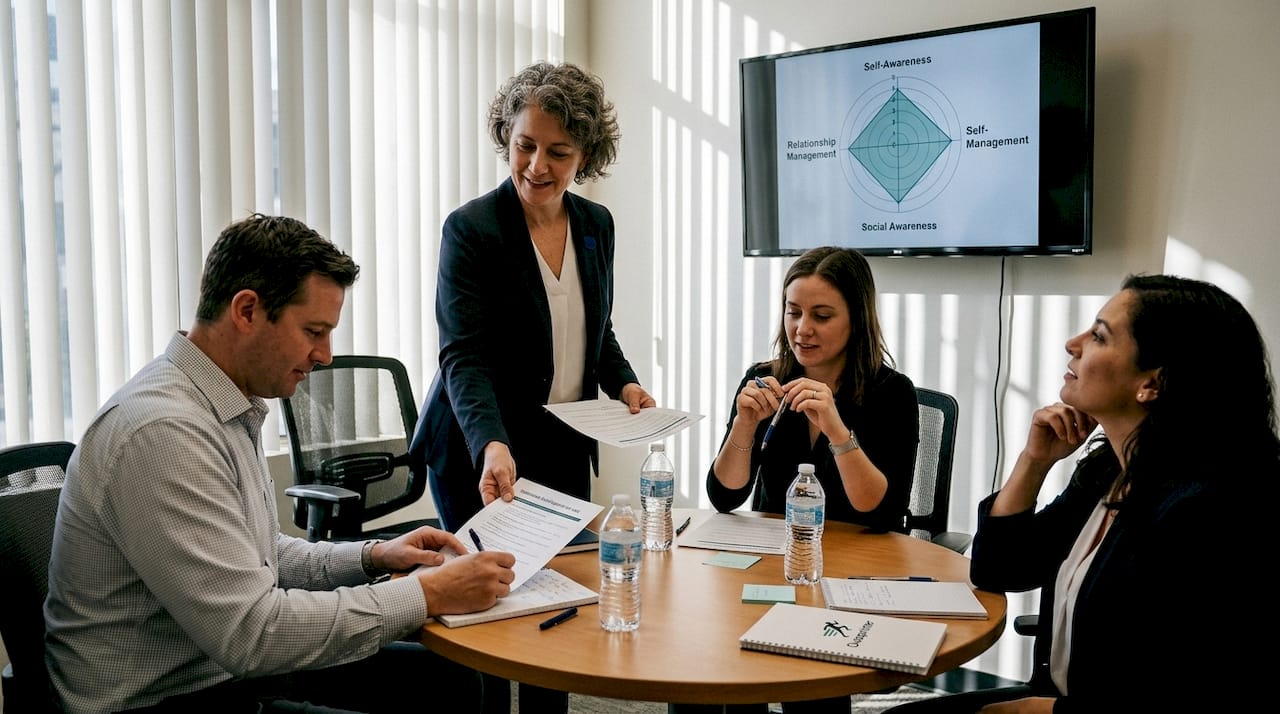
One of the most counterintuitive findings in leadership research is that the best teams aren't just supportive or just demanding. They're both. High-impact CEO teams manage two polarities: safe and challenging, steward versus manager. Getting this balance right is what separates resilient teams from fragile ones.
Here's how to build that balance deliberately:
- Create psychological safety first. People need to know they can speak up without penalty before they'll take creative risks.
- Set high standards explicitly. Ambiguity about expectations breeds mediocrity. Be clear about what excellence looks like.
- Reward candor. When someone raises a hard truth, recognize it publicly. This signals that honesty is valued.
- Hold accountability without blame. Focus on systems and decisions, not personal failure, when things go wrong.
- Celebrate learning, not just winning. Teams that treat setbacks as data points grow faster than those that avoid failure at all costs.
| Environment type | Strengths | Risks if overemphasized |
|---|---|---|
| Safe and supportive | Innovation, trust, retention | Complacency, conflict avoidance |
| Challenging and demanding | Accountability, high output | Burnout, fear-based culture |
| Balanced (both) | Resilience, sustained performance | Requires active management |
For a structured approach to this balance, a leadership performance review process gives you the data to see where your team sits on this spectrum. Understanding how high-performing leadership teams use KPIs differently also helps you measure both dimensions objectively.
Translate best practices into actionable frameworks
Knowing what good looks like is only half the battle. The other half is building systems that make good the default. Leadership teams create action plans, differentiate meeting purposes, and maintain ongoing vigilance about execution. That's not inspiration. That's infrastructure.
Here's a practical framework for structuring your leadership team's operating rhythm:
- Decision meetings: Reserved for choices that require full team input and commitment. Keep them focused and time-boxed.
- Planning meetings: Forward-looking sessions where strategy is translated into quarterly and monthly priorities.
- Development meetings: Dedicated time for team learning, feedback, and capability building. Often skipped, always valuable.
- Review meetings: Structured check-ins against KPIs, milestones, and action plans. These are your accountability engine.
| Meeting type | Frequency | Primary output |
|---|---|---|
| Decision | As needed | Clear, documented decisions |
| Planning | Quarterly | Prioritized roadmap |
| Development | Monthly | Skills and team growth |
| Review | Weekly or biweekly | Progress and course corrections |
For measuring team performance consistently, this rhythm gives you the structure to catch problems early and celebrate wins in real time. Use diagnostics for team performance to validate whether your operating rhythm is actually producing results.
Pro Tip: Schedule a quarterly diagnostic session, such as a 360 feedback review or an offsite retreat, to recalibrate your team's priorities and address any structural issues before they compound.
Compare leadership team practice outcomes
With frameworks in hand, it's worth stepping back to see which practices deliver the biggest return. Not all investments in team effectiveness are equal, and executives need to prioritize where to focus first.
A Gallup meta-analysis found that highly engaged teams deliver 18% more productivity and 23% more profitability compared to disengaged teams. Diverse teams in the top quartile see 35% higher financial returns. These aren't marginal gains. They're transformational.
| Practice | Primary impact | Measurable outcome |
|---|---|---|
| Engagement-focused leadership | Culture and retention | +18% productivity, +23% profitability |
| Diverse team composition | Decision quality | +35% financial returns |
| Regular performance reviews | Accountability | Faster course correction |
| Emotional intelligence development | Collaboration | Reduced conflict, higher trust |
| Structured meeting cadence | Execution | Fewer missed milestones |
Based on this data, here are the recommended next steps for leadership teams ready to act:
- Audit your current engagement levels using a validated survey tool before making structural changes.
- Review team composition for diversity of thought, background, and functional expertise.
- Implement a structured meeting cadence that separates decision, planning, development, and review sessions.
- Invest in emotional intelligence training as a team-wide initiative, not just for individual leaders.
- Track KPIs consistently so that performance conversations are grounded in data, not perception.
For a deeper look at boosting team success through visualization and data, the right tools make all the difference. Reviewing high-impact CEO team dynamics can also help you benchmark your team against what the research says works.
Empower your leadership team with Outsprinter solutions
Applying these best practices consistently requires more than good intentions. It requires the right infrastructure. The Outsprinter team performance platform gives leadership teams a single place to track KPIs, manage tasks, and monitor strategic progress in real time. Whether you're running weekly review meetings or quarterly planning sessions, having live data at your fingertips changes the quality of every conversation.
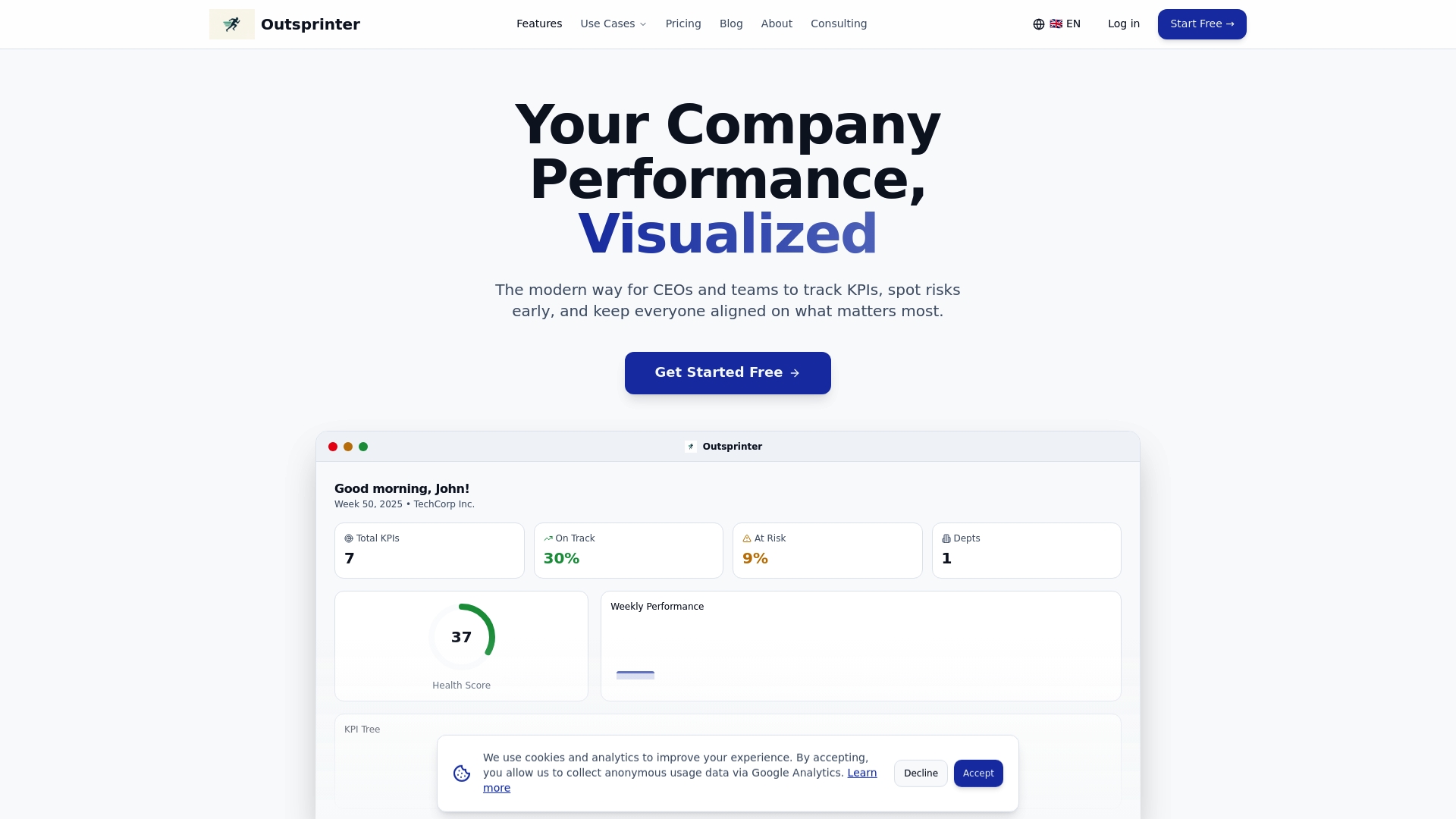
With KPI management software built for executive teams, you can define, visualize, and share performance indicators across every department. The project management platform keeps workloads balanced and milestones visible, so nothing falls through the cracks. If you're serious about turning the practices in this article into measurable results, Outsprinter gives you the tools to make that happen without adding complexity to your team's workflow.
Frequently asked questions
What are the most critical best practices for leadership teams?
Frequent strategy meetings, consistent investment in team development, and clear action plans are the practices with the most documented impact. Regular self-assessment keeps teams from drifting away from what works.
How does team size affect leadership team performance?
The optimal median span is 5-6 members per manager, which allows for meaningful engagement and focused development. Task complexity and manager skill level can shift this number, but larger teams consistently show lower engagement.
Which frameworks help diagnose and improve leadership team effectiveness?
The McKinsey TEI model and Bain performance diagnostics are two of the most rigorous tools available for structured team assessment. Pairing these with regular 360 feedback gives you both quantitative and qualitative insight.
How do leadership teams balance support and accountability?
High-impact CEO teams deliberately manage the tension between psychological safety and high standards, creating environments where candor is rewarded and accountability is built into the culture. Neither extreme alone produces sustained performance.
What impact do diversity and engagement have on team outcomes?
Diverse top-quartile teams see 35% higher financial returns, while highly engaged teams produce 18% more productivity and 23% more profitability. These two factors together represent the highest-leverage investment a leadership team can make.