
TL;DR:
- Clear, structured performance processes prevent targets from being missed due to vagueness.
- Continuous monitoring and real-time feedback significantly boost team engagement and productivity.
- Adaptive, evolving management approaches and AI tools enhance long-term performance success.
Teams that miss their targets rarely do so because of a lack of effort. More often, the real culprit is a vague, inconsistent performance process that leaves managers guessing and employees unsure of what success looks like. When goals are fuzzy and feedback is sporadic, productivity suffers. The good news: structured performance management changes that equation entirely. This guide walks you through every step, from setting goals to rewarding results, backed by research and practical tools so your team can hit targets with confidence.
Table of Contents
- The essential tools and prerequisites for performance management
- Step 1: Planning and goal setting
- Step 2: Monitoring feedback and performance
- Step 3: Developing, evaluating, and rewarding performance
- A fresh perspective: What most performance management guides miss
- Connect your teams with powerful performance management solutions
- Frequently asked questions
Key Takeaways
| Point | Details |
|---|---|
| Structured process matters | Applying step-by-step performance management ensures teams consistently reach their targets. |
| Feedback drives engagement | Weekly, meaningful feedback leads to 80% employee engagement and higher productivity. |
| AI accelerates results | Artificial intelligence boosts productivity by 15-50% across key tasks and helps automate performance tracking. |
| Preparation is key | Setting up the right tools, resources, and communication plans is essential before you begin. |
| Adaptability wins | Successful managers customize their approach for edge cases and evolving team needs. |
The essential tools and prerequisites for performance management
Before you launch any performance management initiative, you need the right foundation. Think of it like building a house: even the best blueprint fails without the right materials on site. Getting your tools and prerequisites in order upfront saves you from costly mid-process corrections.
Here's what you'll need before you begin:
- Performance management software with real-time dashboards and KPI tracking
- Feedback channels such as one-on-one meeting templates, pulse surveys, and shared comment threads
- Clear organizational goals that cascade down to team and individual levels
- Trained managers who understand how to coach, not just evaluate
- A communication strategy that explains the process to every team member before it starts
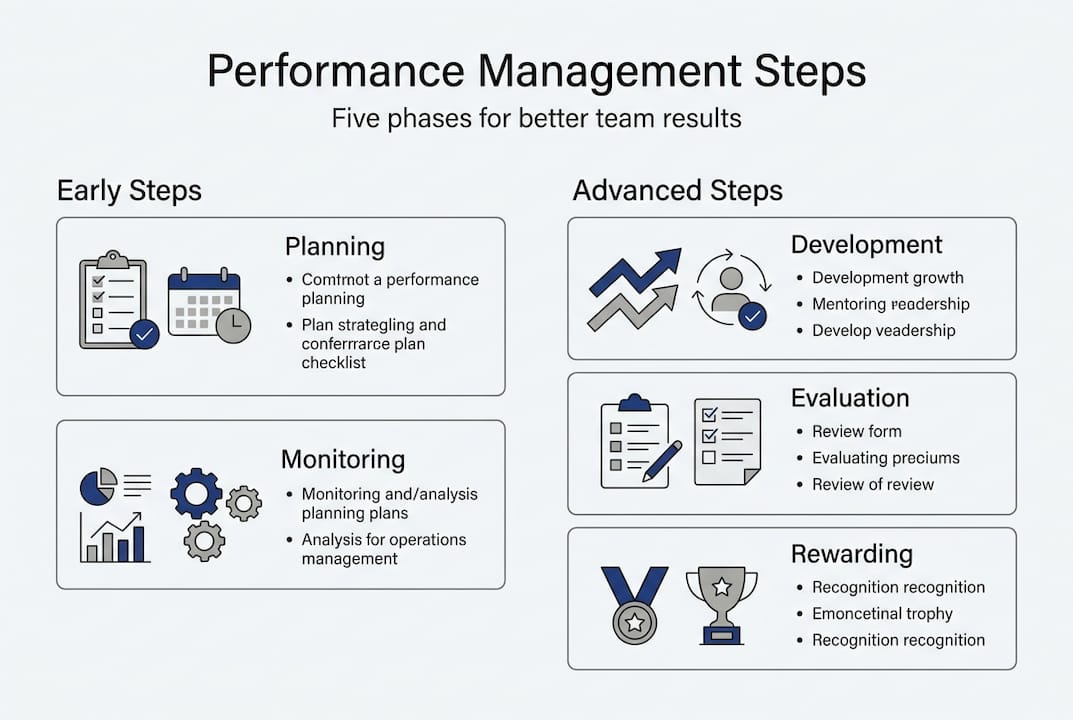
The performance management cycle defined by the U.S. Office of Personnel Management covers five phases: Planning, Monitoring, Developing, Rating/Evaluating, and Rewarding. Each phase depends on the previous one, which means skipping the preparation stage creates gaps that compound over time.
When selecting a software platform, compare your options carefully:
| Feature | Basic tools | Advanced platforms |
|---|---|---|
| Real-time KPI dashboards | Rarely included | Standard feature |
| Automated feedback reminders | Manual only | Automated and scheduled |
| Goal alignment across departments | Spreadsheet-based | Built-in hierarchy mapping |
| AI-assisted insights | Not available | Available in leading tools |
| Data export for reporting | Limited formats | CSV, Excel, and more |
Exploring proven performance management strategies before choosing your tools helps you match platform features to your actual workflow needs. For growing organizations, a scalable performance management guide can help you avoid outgrowing your system too quickly.
Pro Tip: Don't roll out a new performance management platform to your entire organization at once. Pilot it with one department or team first. This lets you catch usability issues, gather honest feedback, and refine your communication strategy before a company-wide launch.
Step 1: Planning and goal setting
Once your tools and prerequisites are in place, it's time to start with the foundational step: planning and goal setting. This is where performance management either gains traction or loses it before it even begins.
Effective goal setting follows the SMART framework:
- Specific: Define exactly what needs to be achieved, not just a general direction
- Measurable: Attach a number, percentage, or clear deliverable to every goal
- Achievable: Set targets that challenge the team without being unrealistic
- Relevant: Connect each goal directly to a broader organizational priority
- Time-bound: Assign a clear deadline so progress can be tracked week by week
The planning phase is the first step in the performance management cycle, and it sets the tone for everything that follows. A goal that isn't measurable can't be monitored. A goal without a deadline creates no urgency.
Goal visibility is just as important as goal quality. When team members can see their targets on a shared dashboard, they stay oriented. Real-time goal tracking tools let managers spot drift early, before a small delay becomes a missed quarter. Platforms that let you boost KPI results through visual tracking make this process far less manual.
Statistic: Organizations that use structured goal-setting processes see significantly higher team alignment and accountability compared to those relying on informal methods.
Pro Tip: Involve your team members in defining their own goals rather than handing targets down from above. When people help shape their objectives, ownership increases and resistance drops. Even a 30-minute collaborative goal-setting session per employee can dramatically improve follow-through.
Step 2: Monitoring feedback and performance
With clear goals set, monitoring and feedback are next. This is where performance management becomes dynamic, shifting from a static plan into a living process.
Continuous monitoring means you're not waiting for a quarterly review to discover that something went off track three months ago. Instead, you're catching issues in real time and adjusting before they compound. Tools that support this include:
- Live KPI dashboards that update as teams log progress
- Weekly check-in templates for structured one-on-one conversations
- Automated alerts when a KPI drops below a set threshold
- Pulse surveys to gauge team morale alongside performance data
- Task tracking systems that show completion rates and deadline adherence
Employees receiving weekly feedback are fully engaged at a rate of 80%, and that engagement directly improves both productivity and the manager's ability to delegate effectively. That's a number worth acting on.

Here's how monitoring frequency affects team outcomes:
| Feedback frequency | Engagement level | Issue detection speed |
|---|---|---|
| Annual reviews only | Low | Months after the fact |
| Monthly check-ins | Moderate | Weeks after the fact |
| Weekly structured feedback | High (up to 80%) | Within days |
| Real-time dashboard tracking | Highest | Immediate |
Using AI in performance management can automate parts of this monitoring process, flagging patterns in performance data that a busy manager might miss. A solid performance tracking guide can help you set up the right cadence for your team size.
Critical note: When a team member is underperforming, vague feedback like "you need to do better" is counterproductive. Feedback must be specific, tied to observable behavior, and paired with a concrete solution or support plan. This protects both the employee's development and the organization's legal standing.
Step 3: Developing, evaluating, and rewarding performance
Effective monitoring leads to actionable development, evaluation, and ultimately meaningful rewards. This final phase is where your investment in the earlier steps pays off.
Developing your team means closing the gap between current performance and desired performance through targeted coaching and training. Here's a practical sequence:
- Identify skill gaps using performance data from your monitoring phase
- Assign targeted learning such as workshops, mentoring, or online courses
- Set a development timeline with milestones so progress is trackable
- Follow up regularly to assess whether the training is translating into results
- Adjust the development plan if progress stalls, rather than waiting for the next formal review
Structured evaluations matter because they create a documented record of performance over time. This protects managers during compensation decisions and gives employees a fair, transparent basis for feedback. A well-run performance review process removes subjectivity and builds trust across the team.
Rewarding high performers is often underestimated as a performance management tool. Recognition doesn't have to be financial. Public acknowledgment, expanded responsibilities, and flexible work arrangements all reinforce the behaviors you want to see repeated. A team performance improvement guide can help you design reward structures that fit your culture.
Statistic: AI productivity gains in tasks like writing and customer support range from 15% to 50%, with measurable effects on overall organizational performance.
Pro Tip: Use AI tools to accelerate employee development. AI assistants can analyze individual performance patterns, suggest personalized learning paths, and even draft development plans based on KPI data. This cuts the time managers spend on admin and puts more energy into actual coaching conversations.
A fresh perspective: What most performance management guides miss
Most performance management content focuses on structure: set goals, track progress, run reviews, give rewards. That framework is solid. But here's what those guides rarely say: the managers who get the best long-term results are the ones who treat their process as a living system, not a fixed protocol.
Rigid processes break down at the edges. A high performer going through a personal crisis needs a different response than a new hire who hasn't yet found their rhythm. Solution-oriented feedback for underperformers and controlled pilot programs for new tools aren't just best practices. They're evidence that the best managers adapt their approach to fit the situation.
The teams that consistently hit their targets aren't following a perfect process. They're following a process that evolves. Staying current with performance management trends helps managers recognize when their system needs an update before performance data tells them something has gone wrong.
Build your process to flex, not just to function.
Connect your teams with powerful performance management solutions
The steps in this guide are only as effective as the tools you use to implement them. Outsprinter brings all five phases of performance management into one platform, giving your team real-time visibility, automated tracking, and AI-powered insights without the spreadsheet chaos.
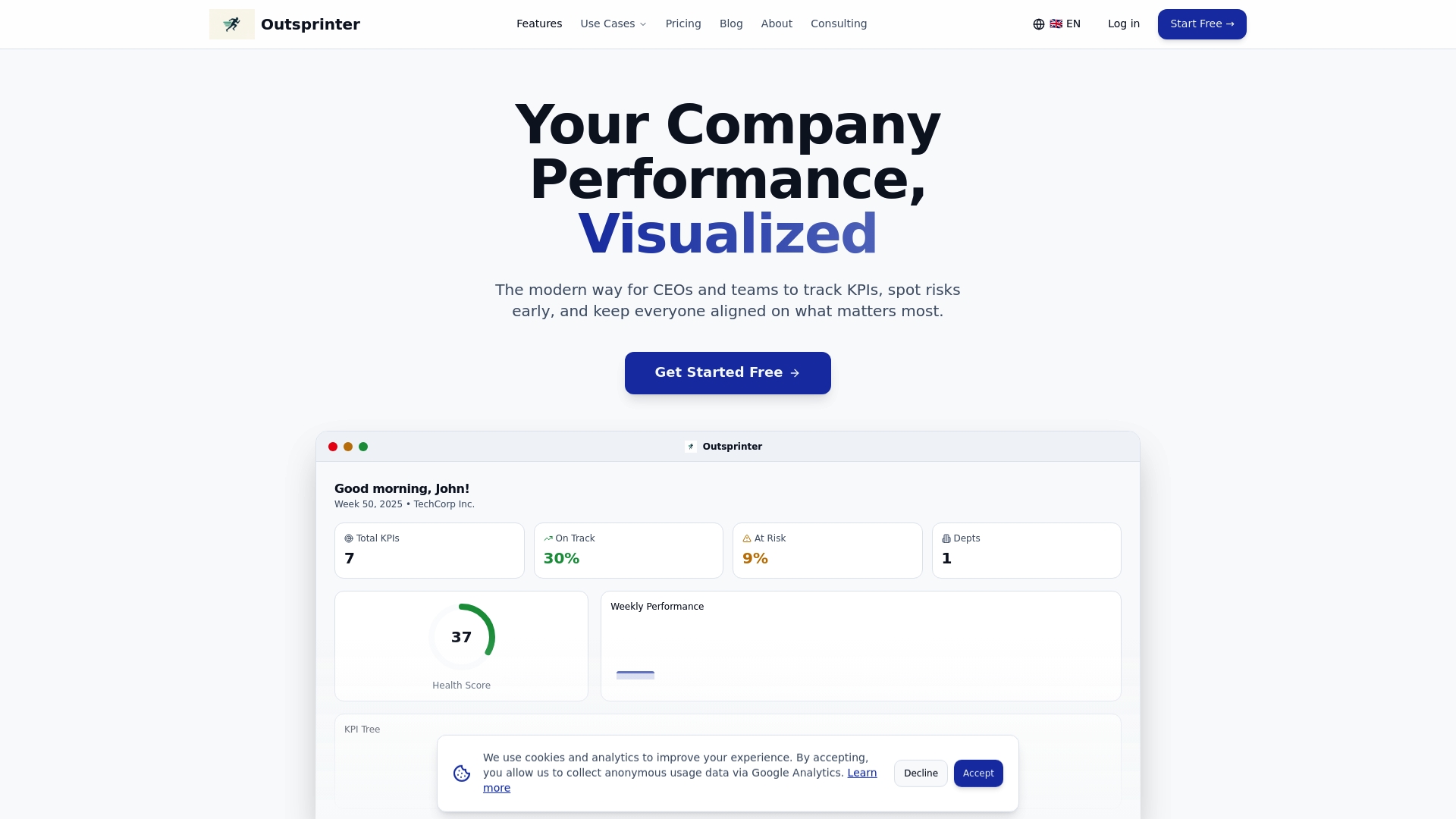
With KPI management software that updates instantly as teams log data, and project management tools that show workload, health metrics, and progress at a glance, your managers spend less time chasing status updates and more time coaching. The team performance platform also includes a Goal Planner, AI Assistant, and role-based access so every team member sees exactly what they need. Explore Outsprinter and put your performance management process to work.
Frequently asked questions
What are the five main steps in a performance management cycle?
The five key steps are planning (goal setting), monitoring feedback, developing talent, evaluating performance, and rewarding accomplishments. Each phase builds directly on the one before it.
How does weekly feedback impact employee engagement?
Weekly meaningful feedback raises full engagement rates to 80% and has a direct, measurable effect on both individual productivity and a manager's ability to delegate confidently.
What role does AI play in modern performance management?
AI increases task-level productivity by 15% to 50% and helps automate feedback analysis, development planning, and real-time dashboard reporting so managers can focus on coaching.
What's the best way to handle underperforming team members?
Use specific, solution-oriented feedback tied to observable behavior and pair it with a concrete support plan. Pilot any new systems in a small group before rolling them out more broadly.