
TL;DR:
- Most organizations lack effective, structured performance tracking methods.
- Proper tracking enhances engagement, detects bottlenecks, and supports organizational agility.
- Using clear metrics, transparent communication, and automation tools drives meaningful performance improvements.
Most organizations believe they are tracking performance well. Yet 77% of HR leaders say traditional evaluations are insufficient, and real productivity gains remain out of reach for the majority of teams. The gap is not about effort. It is about method. Tracking without a clear framework produces data noise, not direction. This article walks you through why structured team performance tracking matters, which metrics actually move the needle, what tools to use, and how to avoid the traps that turn tracking into a trust-destroying exercise. You will leave with a practical, actionable approach.
Table of Contents
- Why tracking team performance matters
- Key metrics: What to track for actionable insights
- Technology and tools: Streamlining tracking for results
- Pitfalls and balancing acts: Tracking done right
- From tracking to transformation: Applying insights for real performance gains
- Our perspective: What most team managers get wrong about performance tracking
- Unlock the power of smarter team performance tracking
- Frequently asked questions
Key Takeaways
| Point | Details |
|---|---|
| Holistic tracking is essential | Start with a mix of productivity, engagement, and outcome metrics to get a complete picture of team performance. |
| Technology multiplies impact | Digital tools and dashboards enable faster feedback and smarter decisions, benefiting both managers and teams. |
| Balance data with trust | Successful teams use transparent, non-intrusive metrics and prioritize building a culture of trust over surveillance. |
| Apply insights for growth | Use tracking data for coaching, incentives, and continuous team improvement, not just reporting. |
Why tracking team performance matters
With that gap between process and results in mind, let's examine why tracking really matters.
Most managers assume that having a system in place is enough. It is not. The difference between organizations that improve and those that stagnate comes down to how intentionally they use performance data. Tracking team performance enhances engagement, supports career development, surfaces bottlenecks early, and builds organizational agility. That is not a minor benefit list. That is the backbone of a high-performing team.
Engagement is the first lever. When employees see their contributions measured and recognized, motivation rises. Tracking creates visibility, and visibility creates accountability in the best sense. People know where they stand, what is expected, and where to grow. That clarity alone can shift team dynamics significantly.
Bottleneck detection is the second major gain. Without tracking, workflow problems stay invisible until they become crises. A project that is three weeks behind schedule rarely announces itself early. Structured tracking catches delays, resource conflicts, and capacity gaps while there is still time to act. If you want to boost productivity with tracking, early detection is one of the fastest returns you will see.
Organizational agility is the third reason. Markets shift. Priorities change. Teams that track performance in real time can pivot faster because they are not guessing about capacity or output. Organizational performance tracking gives leadership the data needed to make fast, confident decisions instead of reactive ones.
Here is what effective performance tracking delivers:
- Clearer career paths for individual contributors
- Earlier identification of workflow bottlenecks
- Stronger alignment between team output and business goals
- Faster pivots when priorities shift
- Higher engagement through transparent goal visibility
Stat to know: 97% of HR leaders and 89% of employees report direct benefits from software-driven performance tracking. The data is not ambiguous.
Tracking is not bureaucracy. Done right, it is the clearest signal your team has about what matters and how they are doing against it.
Key metrics: What to track for actionable insights
Understanding the 'why' sets the stage. Now let's break down what to actually track for maximum impact.
Not all metrics are equal. Tracking the wrong ones creates reporting overhead without improving anything. The goal is to select a focused set of measures that connect daily team activity to strategic outcomes. Empirical benchmarks show up to 30% productivity gains through structured tracking habits, and bonus incentives tied to tracked metrics boost non-routine team performance significantly.
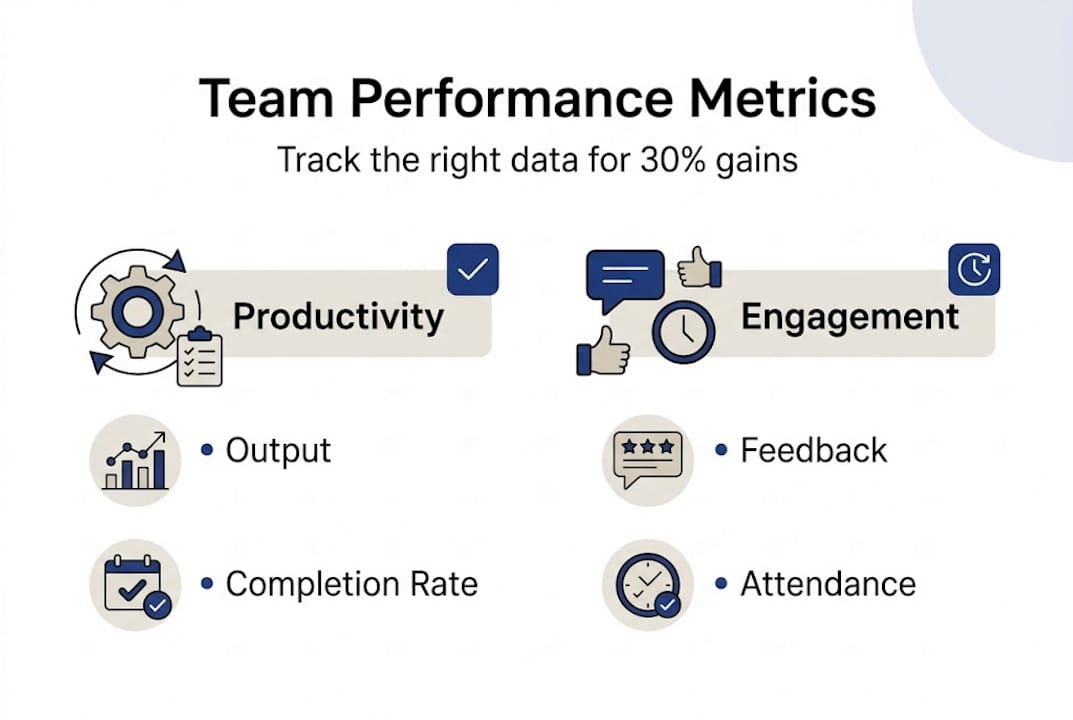
Here is a side-by-side comparison of the four core metric categories:
| Metric category | What it measures | Best used for |
|---|---|---|
| Productivity | Output per person or team over time | Capacity planning, workload balance |
| Engagement | Participation, satisfaction, initiative | Retention risk, culture health |
| Project outcomes | On-time delivery, quality, scope adherence | Execution effectiveness |
| Retention | Turnover rate, tenure, internal mobility | Long-term team stability |
To select the right metrics for your team, follow this sequence:
- Start with your business goal. What does success look like in the next quarter? Define that first.
- Identify the team behaviors that drive that goal. Output volume? Collaboration frequency? Delivery speed?
- Choose 3 to 5 metrics that directly reflect those behaviors. Fewer is better.
- Set a baseline. You cannot track improvement without knowing where you started.
- Review and adjust quarterly. Metrics that made sense six months ago may not fit today's priorities.
For practical team performance metrics examples that map to real team scenarios, look beyond generic KPI lists and focus on what your team actually controls. If you want a structured starting point, a metrics checklist for leaders can help you avoid common selection mistakes.
Pro Tip: Use a multi-metric dashboard that shows productivity, engagement, and outcome data side by side. Single-metric views create blind spots. A holistic view lets you catch the early signs of burnout before output numbers drop.
Technology and tools: Streamlining tracking for results
Having picked your metrics, the next challenge is capturing and acting on them. Technology makes this seamless.

97% of HR leaders and 89% of employees benefit from software-driven tracking. That near-universal endorsement reflects a real shift. Manual tracking via spreadsheets introduces lag, error, and inconsistency. Modern platforms automate data capture, surface trends in real time, and reduce the administrative burden on managers.
Here is how the main categories of tracking tools compare:
| Tool type | Core strength | Limitation |
|---|---|---|
| KPI management platforms | Tracks and visualizes strategic metrics | Requires clear KPI definitions upfront |
| Task management tools | Captures individual and team workload | May miss qualitative performance signals |
| Project management software | Monitors delivery, health, and timelines | Less effective for engagement metrics |
| Integrated platforms | Combines all of the above in one workspace | Higher setup investment |
When evaluating team productivity tools, look for these must-have features:
- Real-time dashboards that update as data is entered
- Goal and KPI alignment so metrics connect to strategy
- Role-based access to protect data sensitivity
- Qualitative input fields for manager notes and peer feedback
- Export and import capabilities for external reporting
- Automated alerts for KPI changes or missed deadlines
For performance visualization tips that make data readable for every stakeholder, prioritize clean chart design over feature overload. The best dashboards answer one question at a glance: is the team on track?
Pro Tip: Choose platforms that support both quantitative data (numbers, completion rates) and qualitative inputs (feedback, notes). Teams are not spreadsheets. Capturing the full picture requires both. The task management software benefits extend well beyond task lists when the tool integrates with your KPI layer.
Pitfalls and balancing acts: Tracking done right
Implementing digital solutions is powerful, but it is critical to avoid the most common tracking mistakes.
"Time-tracking can erode trust, cause stress, and stifle collaboration if overused. When employees feel surveilled rather than supported, performance declines instead of improving."
This is the central tension in performance tracking. The same tools that provide clarity can create anxiety if misapplied. Intrusive monitoring, tracking every mouse click or minute logged, signals distrust. That signal travels fast through a team and damages the culture you are trying to build.
Metric gaming is the second major risk. When people know they are being measured on a specific number, they optimize for that number rather than the underlying goal. A team measured purely on ticket volume will close tickets faster but may sacrifice quality. A team measured only on hours logged will look busy without being productive.
Here is a practical framework to keep tracking healthy:
- Be transparent about what you track and why. Share the metrics with the team before you start. Surprises breed suspicion.
- Focus on outcomes, not activity. Measure what was delivered, not how many hours were spent.
- Build in qualitative check-ins. Numbers tell you what happened. Conversations tell you why.
- Rotate metric reviews. Avoid fixating on the same KPI for too long. Rotate focus to prevent gaming.
- Give teams access to their own data. Autonomy over personal performance data increases ownership and reduces anxiety.
For guidance on building a scalable management ROI framework that balances accountability with trust, the key principle is simple: track to support, not to surveil.
From tracking to transformation: Applying insights for real performance gains
With traps addressed, here is how to use your data for transformational team outcomes.
Bonus incentives and coaching based on tracked metrics accelerate non-routine performance and project completion rates. That connection between data and action is where most organizations leave value on the table. They collect the data but never close the loop.
Here is how to convert tracking insights into real performance gains:
- Use data in 1-on-1 coaching sessions. Bring specific metrics to each conversation. Replace vague feedback with concrete observations tied to numbers.
- Identify top performers and replicate their patterns. If one team member consistently delivers on time, analyze their workflow and share it as a model.
- Tie incentives to tracked milestones. Bonuses and recognition land harder when they are connected to visible, measurable progress.
- Run peer feedback cycles anchored to shared metrics. When everyone sees the same data, feedback becomes collaborative rather than evaluative.
- Use trend data for capacity planning. If output drops every fourth week, that is a signal worth investigating before it becomes a pattern.
- Celebrate incremental wins. Tracking shows progress in real time. Use that visibility to recognize effort before the final result arrives.
Building a culture of constructive performance conversations starts with making data a shared resource, not a management weapon. When teams own their metrics, they engage with them. Understanding the psychology of weekly tracking explains why regular, short review cycles outperform annual reviews in driving sustained behavior change.
Our perspective: What most team managers get wrong about performance tracking
After grounding you in the how-to, it is time for a candid look at the big picture.
Most tracking failures are not technology failures. They are philosophy failures. Managers assume that more data equals better teams. It does not. A dashboard full of metrics that nobody acts on is just expensive noise.
The real issue is that tracking is often designed for the manager, not the team. When employees cannot see their own data, cannot influence what gets measured, and cannot connect their daily work to a visible outcome, tracking becomes surveillance. And the contrast is clear: tracking drives agility and accountability when it is transparent, but it drives micromanagement and burnout when it is not.
The managers who get this right share one habit. They treat performance data as a conversation starter, not a verdict. They bring metrics to their teams and ask "what does this tell us?" rather than "why did you miss this?"
Selective tracking aligned with company purpose consistently outperforms exhaustive monitoring. Three well-chosen metrics reviewed weekly with the team beat twenty metrics reviewed quarterly by leadership alone. See what effective metrics in practice look like when teams actually own the process.
Unlock the power of smarter team performance tracking
If the frameworks in this article resonated, the next step is putting them into a single, connected workspace.
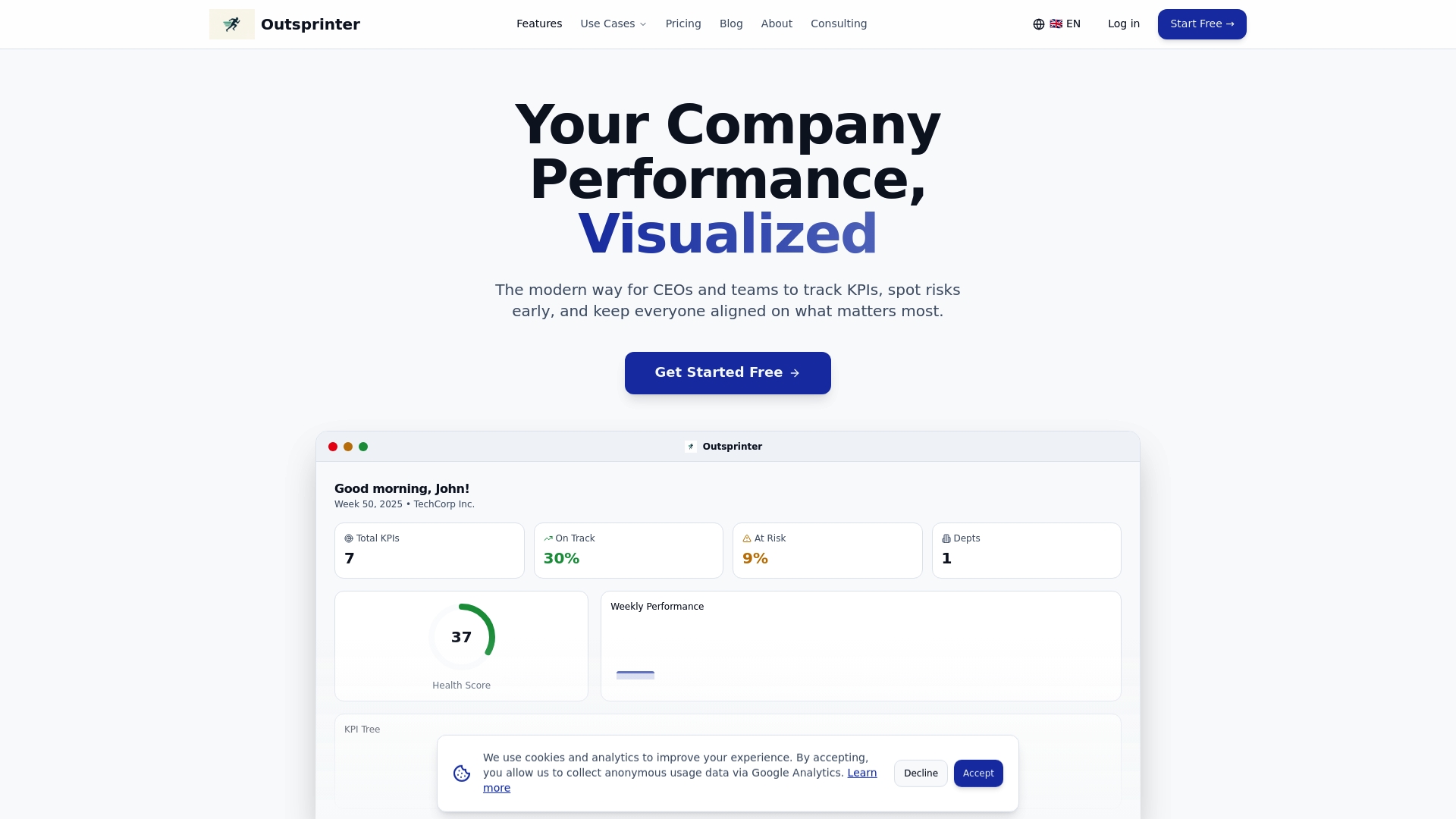
The Outsprinter platform brings together real-time dashboards, KPI tracking tools, and project management features so your team's metrics, goals, and tasks live in one place. No more switching between tools or reconciling spreadsheets. You define the KPIs, assign the tasks, track progress in real time, and coach from data that is always current. Whether you are managing five people or five hundred, Outsprinter scales with your team's complexity without adding administrative overhead. Start turning your tracking data into real performance gains today.
Frequently asked questions
What are the most important team performance metrics to track?
Focus on productivity, engagement, project delivery, and retention for a balanced view. Multi-metric tracking using digital tools gives you the holistic picture needed to act on strengths and address gaps.
How do you track team performance without damaging trust?
Adopt a transparent, coaching-based approach and share metrics directly with your team. Over-monitoring erodes trust and causes stress, so keep tracking focused on outcomes rather than activity.
What are the typical results of effective performance tracking?
Organizations often see up to 30% productivity gains along with faster project delivery and higher employee engagement when tracking is structured and consistently applied.
How can technology help in tracking team performance?
Technology automates data capture, delivers real-time dashboards, and helps managers coach based on accurate metrics. 97% of HR leaders confirm that software-driven tracking directly improves performance outcomes.
What common mistakes should be avoided when tracking team performance?
Avoid over-surveillance, metric gaming, and relying on a single data type. Hybrid tracking approaches that blend outcome and activity data reduce stress and prevent performative busyness from masking real results.
Recommended
- Why measure team performance to boost productivity
- Why tracking organizational performance boosts CEO decisions
- Task management drives results: 42% of tasks fail
- Scalable performance management: boost teams 316% ROI
- Team Productivity Tools: Boosting Collaboration Success - Projector Display
- Why team building matters: 23% more profit in Berlin